

Health and Fitness Retreats with a Mental Health Focus
Best Health and Fitness Retreats With a Mental Health Focus
Picture this: you spend a week at a fitness camp. You sweat through every session, eat clean, sleep early, and come home five pounds lighter. Then, three months later, you’re back where you started. Same stress, same late-night habits, same number on the scale. Short-term relapse after fitness retreats is common in the literature, and the brochure rarely warns you about it.
Physical results without emotional foundation tend to be temporary. The adults who are seeing the most durable change in 2026 aren’t just working harder at the gym. They’re attending health and fitness retreats with a focus on mental health, programs that treat the mind and the body as one connected system, not two separate projects.
That’s the defining shift happening in the retreat world right now. The best programs are building daily schedules where mindset work, emotional processing, and physical transformation happen in the same place, at the same time. This article breaks down what that integration actually looks like, what the research confirms, and how to find the right program for where you are right now.
Why Health and Fitness Retreats With a Focus on Mental Health Are Redefining Results
Fitness-only programs often produce short-term results for one straightforward reason: they address the symptom without touching the cause. Many adults who regain weight after a program can trace it back to unresolved psychological patterns, not a lack of effort. Stress, grief, burnout, trauma, and hormonal shifts are the actual drivers behind why many people overeat, stop moving, and abandon routines within weeks of returning home. A program that skips the emotional work is leaving the hardest part undone.
The physiology backs this up. Chronic stress elevates cortisol, which promotes visceral fat accumulation (particularly around the abdomen), amplifies cravings for calorie-dense foods, and disrupts sleep quality. The body is keeping score. Research shows that visceral adipose tissue has a higher density of glucocorticoid receptors than other fat tissue, making it especially sensitive to cortisol exposure. A fitness program that ignores a guest’s stress load isn’t just missing something. It’s actively working against itself.
Retreat operators across the U.S. have recognized this. In 2026, mindfulness facilitators, trauma-informed practitioners, and life coaches are showing up on staff rosters at programs that used to focus exclusively on physical output. This reflects growing demand from burned-out professionals, women navigating hormonal weight changes, and adults processing major life transitions who need more than a calorie deficit and a treadmill schedule.
What the Research Actually Says About Mental Health Outcomes at Retreats
The science here is genuinely encouraging. A systematic review of 21 studies covering 2,912 participants found that retreat programs produced moderate-to-large reductions in depression (effect size of 0.48), anxiety (0.67), and stress (0.94). These are not marginal numbers. For context, many outpatient mindfulness programs produce effects well below this range, and standard vacations produce almost none.
The durability question matters just as much as the initial outcome. Research shows improvements in mood, sleep, stress, and anxiety are sustained for several weeks to months after leaving a retreat. For trauma-informed programs studied with veterans and emergency responders, benefits persisted for up to six months. Studies tracking cancer patients showed quality-of-life improvements for up to five years post-retreat. A seven-day residential program specifically showed an average weight loss of 3.5 pounds, a waist reduction of 1.1 inches, and a systolic blood pressure drop of 16.1 mmHg, with many markers remaining improved at six weeks.
Retreats consistently outperform outpatient wellness programs because immersion removes you from the environment generating your stress. You aren’t commuting, checking email, or defaulting to ingrained patterns. That physical and psychological distance, combined with structured therapeutic practices and peer community, creates conditions that weekly therapy or gym sessions simply cannot replicate. Two-thirds of retreat participants take two or more days to experience a meaningful mental shift, which is why very short programs of two to three days often feel like a preview rather than a transformation.
What a Genuinely Dual-Focus Retreat Program Looks Like in Practice
There’s a meaningful distinction worth understanding before you book anything: the difference between licensed clinical psychotherapy and therapy-adjacent wellness practices. Most retreats, including elite wellness programs, offer life coaching, guided journaling, group processing, and mindfulness facilitation rather than clinical psychotherapy. That’s not a gap in quality. For most adults seeking lifestyle transformation and personal growth, these practices are deeply effective. But if you need clinical treatment for diagnosed depression, PTSD, or another condition, look specifically for programs with licensed mental health professionals on staff, not just wellness coaches.
In a well-designed program, mindfulness isn’t an optional add-on after the workout ends. It’s woven into the morning routine, embedded in yoga and mobility sessions as intentional emotional recovery, and present in journaling prompts that give participants language for what’s surfacing during physical training. The best health and fitness retreats with a focus on mental health create space for guests to process what’s coming up emotionally, not just physically, because the two are inseparable.
Why Community Structure Matters as Much as Curriculum
The relational structure of a retreat matters more than most people expect. Small-group formats, intentional community design, and inclusive environments where people feel genuinely safe being honest about their struggles produce stronger mental health outcomes than large anonymous camps. Social psychology research on peer accountability shows that people who feel psychologically safe in a group are more consistent, more honest with themselves, and more willing to push through discomfort. When that shared safety exists, the physical challenge becomes something people can actually rise to meet.
What Boutique Programs Like Unite Fitness Retreat Get Right
At Unite Fitness Retreat in Salt Lake City, a low staff-to-client ratio forms the structural foundation for everything else the program delivers. That level of attention would be impossible at a program with 80 guests and three coaches. Closeness creates accountability, but more importantly it creates trust, and trust is the foundation of any meaningful personal transformation. Guests aren’t numbers in a large cohort. They’re known by name, backstory, and goal from day one.
The program is also built for real life circumstances, not idealized ones. Generic fitness camps often aren’t designed for someone navigating a divorce, processing grief, managing hormonal weight changes through menopause, or recovering from years of professional burnout. Unite Fitness Retreat addresses these realities by integrating life coaching, spa recovery, mindfulness sessions, and daily mountain hikes alongside physical training, the kind of multi-modal design that research on retreat programming identifies as most effective for durable change. When the emotional root causes are embedded in the program design, the physical results have a foundation to build on.
How the Mountain Setting Amplifies the Mental Health Benefits
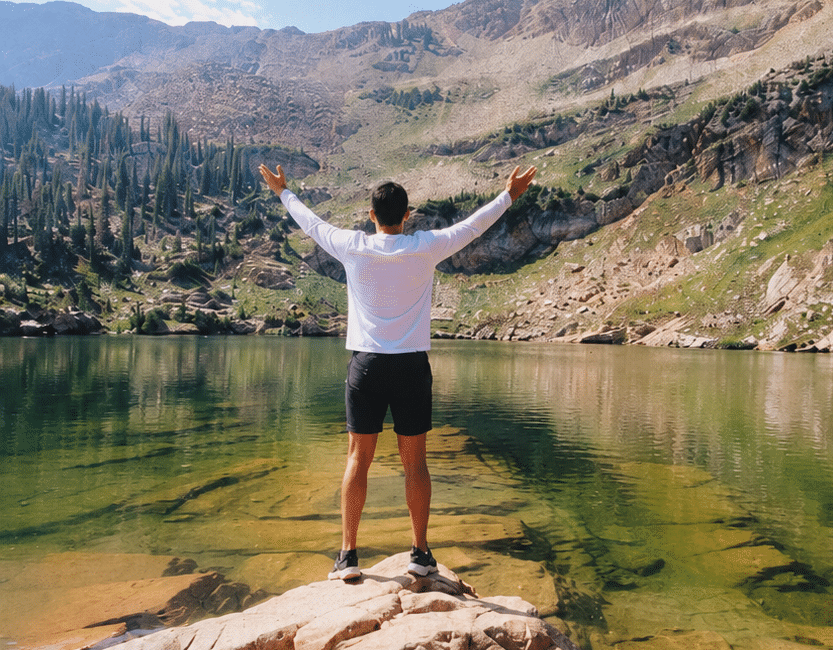
The mountain setting matters too. Daily hikes in the Wasatch Range aren’t just cardio. Shinrin-yoku research and studies on green exercise consistently show that time in natural environments reduces cortisol, lowers inflammatory markers, and improves mood in measurable ways. Combining outdoor movement with structured coaching and community creates a reset that doesn’t evaporate the moment you land back at your home airport.
How to Vet Any Health and Fitness Retreat Before You Hand Over a Deposit
The questions you ask before booking reveal more than any website copy. Ask directly:
- What does your daily mental health support look like?
- Who delivers it and what are their credentials?
- How many guests attend at one time?
- How do you handle a guest who is struggling emotionally mid-program?
- Is mental wellness support included in the base price or billed separately?
A program with genuine integration will answer these questions confidently and specifically.
Red Flags to Watch For
Be cautious of retreats where the website mentions mental wellness but the actual daily schedule has no dedicated time for it. Programs that list “meditation available on request” rather than building it into the structure are signaling their real priorities. Ask specifically about staff-to-guest ratios and what individual attention actually looks like day to day, if the answer is vague, that tells you something. And if the marketing focuses almost entirely on weight lost or calories burned, that tells you what they measure and what they don’t.
Match the retreat format to your specific situation. Someone recovering from burnout and stress-related weight gain needs different support than a fitness-motivated adult looking for an active retreat vacation. Someone navigating perimenopause needs hormone-aware nutrition and coaching, not a one-size-fits-all meal plan. The right program is the one built around your actual life circumstances, not the most impressive facility or the lowest price point.
What to Expect to Invest Across Different Retreat Tiers
Retreat pricing in the U.S. spans a wide range, and the tiers are fairly consistent in what they include. Budget programs in the $75 to $200 per night range typically offer shared accommodations, group fitness classes, and basic meditation sessions. Mid-range programs at $200 to $600 per night add private rooms, curated nutrition, and occasional one-on-one sessions. Premium boutique retreats at $600 to $1,500 per night include chef-prepared personalized meals, daily individual attention, life coaching, and integrated recovery programming. Medical-grade retreats exceeding $1,500 per night add physician oversight, diagnostics, and clinical therapeutic interventions.
Even retreats marketed as all-inclusive often exclude gratuities (budget 15 to 20%), airport transfers, and certain specialized treatments. Before booking, request an itemized breakdown of what the stated rate actually covers. Premium programs that bundle coaching, nutrition education, fitness training, recovery sessions, and meals into one fee often deliver more genuine value than lower-priced programs with meaningful add-on costs hidden in the fine print.
The most useful comparison isn’t cost per night. It’s cost per meaningful outcome. A one-week boutique retreat that produces sustained behavioral and emotional change, reducing healthcare costs and improving long-term quality of life, is worth considerably more than a cheaper program that sends you home with a meal plan you won’t follow after day four. Factor in staff expertise, program depth, community quality, and post-retreat support when evaluating what you’re actually paying for.
Here are several highly regarded mental-health and emotional-wellness retreats in the United States with less of a focus on fitness, nutrition and overall wellness. Some provide clinical treatment, while others focus more on stress reduction, mindfulness and lifestyle support.
- Privé-Swiss — Connecticut
A private, luxury residential program designed for executives and other high-functioning individuals experiencing depression, anxiety, trauma, burnout, addiction recovery needs or cognitive overload. Programs may include intensive psychological care, psychiatric collaboration and highly individualized treatment. - The Bridge Health Recovery Center — Southern Utah
A structured 21-day immersive program serving people dealing with depression, anxiety, trauma, chronic pain and related conditions. The center is Joint Commission accredited and combines behavioral-health support with a restorative retreat environment. - Intensive Therapy Retreats — Multiple U.S. locations
Specializes in private, one-on-one trauma and PTSD intensives, generally completed over several focused days. Treatment approaches include EMDR, Internal Family Systems and Accelerated Resolution Therapy. - Miraval Arizona — Tucson, Arizona
A luxury wellness retreat offering a dedicated mental-wellbeing pathway for guests seeking stress reduction, grounding and improved emotional balance. Programming includes meditation, wellness counseling, mindfulness experiences, outdoor activities and spa therapies. It is best suited to general wellbeing rather than acute psychiatric treatment.
What Lasting Results Actually Require
Think back to the person in the opening scenario. They left a traditional fitness camp physically lighter but emotionally unchanged, and within three months they were back where they started. That outcome isn’t inevitable. It’s the result of a program that treated the body while leaving the mind untouched.
Health and fitness retreats with a focus on mental health are no longer a niche category. They’re becoming the expected standard for adults who want results that actually last past the flight home. The science supports the approach, the programs exist, and the outcomes are documented across thousands of participants in peer-reviewed research. What changes the result is knowing what to look for: dual-focus design, emotionally intelligent programming built into the daily schedule, an inclusive and psychologically safe community, and a staff team that sees you as a whole person rather than a calorie target.
Unite Fitness Retreat reflects what that integration looks like in practice, rigorous fitness training, life coaching, mountain immersion, and genuine community, all working together in one all-inclusive program in Salt Lake City. When the emotional work and the physical work happen together, neither one gets left behind. That’s the program worth finding.