
How to Improve Metabolic Health After 50
How to Improve Metabolic Health After 50: 10 Habits That Actually Work
By Wayne Larsen, Unite Fitness Retreat | Fitness, Weight Loss & Healthy Aging
Improving metabolic health after 50 starts with preserving muscle, building strength, eating a balanced diet, staying physically active, and prioritizing sleep and recovery. These habits can support healthier blood sugar, blood pressure, cholesterol, body composition, and physical function—helping adults in their 50s, 60s, 70s, and beyond feel stronger and stay active as they age.
Here’s some good news: Your metabolism doesn’t officially retire when you turn 50.
Although, admittedly, it can occasionally feel like it has submitted its two-week notice.
Maybe you’re eating roughly the same way you always have, but your waistline has changed. Maybe workouts leave you sorer than they used to. Or perhaps your doctor has started mentioning things like A1C, cholesterol, and blood pressure during appointments that once consisted of little more than “Everything looks good!”
Here’s what matters: Getting older doesn’t mean your health has to move in the wrong direction.
In fact, some of the most meaningful improvements in strength, cardiovascular fitness, and metabolic health can happen well after 50.
The secret isn’t a crash diet, a punishing workout program, or another supplement promising to “reset your metabolism.”
It’s developing a smarter approach that works with your body instead of fighting it.
Whether you’re interested in improving your health at home, exploring a weight loss retreat for adults over 50, or looking for a more comprehensive fitness and longevity program, these ten habits are a great place to begin.
Key Takeaways: Improving Metabolic Health After 50
- Building and preserving muscle is essential. Strength training helps support healthy aging, glucose regulation, mobility, and independence.
- The bathroom scale doesn’t tell the whole story. Blood sugar, cholesterol, blood pressure, waist circumference, fitness, and body composition provide a more complete picture.
- Exercise should include strength and cardio. Walking, hiking, cycling, and aerobic conditioning work alongside resistance training to support metabolic health.
- Nutrition should nourish your body. Adequate protein, fiber, whole foods, and balanced eating patterns matter more than extreme restrictions.
- Menopause and hormonal changes deserve attention. But they aren’t the only factors influencing weight, muscle, energy, and metabolism.
- Recovery is part of fitness. Consistent sleep, stress management, and appropriate rest support sustainable progress.
- Structure and accountability help habits stick. A personalized health and fitness retreat can provide a dedicated environment to learn, practice, and maintain healthier routines.
What Is Metabolic Health After 50?
Metabolic health describes how well your body manages processes involving blood sugar, blood fats, blood pressure, and energy storage.
It’s about much more than how quickly you burn calories.
Someone can be relatively thin and still have elevated blood sugar or cholesterol. Another person may lose several pounds without improving their strength or overall physical fitness.
That’s why metabolic health is better understood through multiple measurements rather than a single number.
Common markers include:
- Hemoglobin A1C
- Fasting blood glucose
- Blood pressure
- Triglycerides
- HDL and LDL cholesterol
- Waist circumference
- Body composition
These markers don’t all measure the same thing, and body composition isn’t a formal diagnostic criterion for metabolic syndrome. Together, however, they can provide useful information about overall health and risk.
Want to understand your numbers? Read our companion article: What Is Metabolic Health? 7 Numbers Adults Over 40 Should Understand.
Why Does Metabolic Health Become More Challenging After 50?
There’s no magical switch that flips on your 50th birthday.
But several gradual changes can influence metabolic health.
Muscle mass and strength may decline
Without regular resistance training, adults typically lose muscle mass and strength as they age.
Less muscle can affect physical function, glucose regulation, and the ability to stay active.
Body fat distribution may change
Many adults notice more abdominal fat with age. Menopause can contribute to changes in fat distribution in women, while activity levels, genetics, and other factors also play important roles.
Recovery and sleep can become more complicated
Work demands, caregiving responsibilities, sleep disturbances, hormonal transitions, and certain health conditions can make recovery more challenging.
Daily movement may decrease
Even people who exercise regularly can spend much of the day sitting.
The combination of less movement and declining muscle strength can make healthy aging more difficult.
But here’s the encouraging part: These changes create reasons to adjust your habits—not reasons to give up.
1. Prioritize Strength Training to Preserve and Build Muscle
If we could encourage every adult over 50 to adopt one exercise habit, strength training would be near the top of the list.
Muscle is much more than something that makes your arms look good in a sleeveless shirt.
Skeletal muscle helps your body use glucose, supports balance and mobility, protects your ability to perform everyday activities, and contributes to functional independence.
The older we get, the more important those benefits become.
Best strength-training exercises after 50
A balanced resistance-training program might include:
- Squats or chair sit-to-stands
- Step-ups and lunges
- Chest presses and modified push-ups
- Seated or standing rows
- Hip hinges and deadlift variations
- Core stability exercises
- Resistance-band movements
Beginners can start with lighter resistance and gradually increase the challenge as they become stronger.
The CDC recommends muscle-strengthening activity at least twice per week. Adults 65 and older are also encouraged to include balance activities.
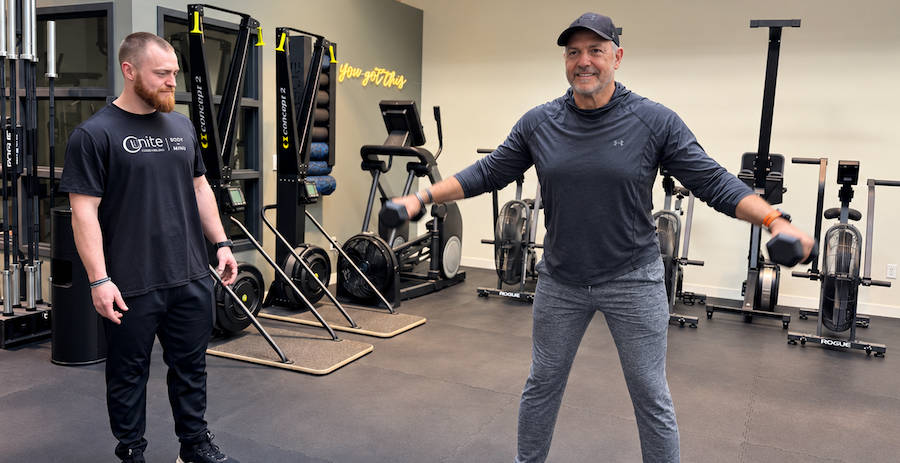
At Unite: Strength training is central to our personalized fitness retreat. We help adults learn appropriate movements, improve technique, and build confidence in a supportive environment.
Whether you’re 52 and returning to exercise or 72 and focused on staying active, the goal is to meet you at your current ability level and help you progress.
2. Focus on Losing Body Fat Without Sacrificing Muscle
One of the biggest mistakes adults make when trying to lose weight after 50 is focusing exclusively on the scale.
Here’s the problem:
Weight loss and fat loss aren’t interchangeable.
When you lose weight, some of that loss may come from muscle and other lean tissue—not just body fat.
For older adults, preserving muscle during weight loss is particularly important.
A better approach combines:
- Progressive strength training
- Adequate protein
- Appropriate calorie intake
- Regular physical activity
- Recovery
- Monitoring of strength and body composition
Rather than celebrating every drop on the scale, ask yourself:
Am I getting stronger?
Do my clothes fit differently?
Can I walk farther without getting tired?
Is my waist circumference improving?
Am I feeling more energetic?
These are meaningful indicators of progress, too.
At Unite, we use InBody body-composition assessments to estimate changes in muscle and fat over time. These assessments are useful monitoring tools, although hydration and other factors can influence the readings.
Related reading: What Does an InBody Scan Measure?
And if you’ve experienced frustrating changes in your progress, see Why Weight Loss Plateaus Happen—and What to Change First.
3. Eat Enough Protein to Support Healthy Aging
Protein becomes particularly important as we age because it supports muscle maintenance, recovery, and physical function.
Yet many adults who are trying to lose weight unintentionally eat too little—especially when following restrictive diets.
The goal isn’t to consume enormous protein shakes at every meal.
It’s to consistently include protein-rich foods in a balanced eating pattern.
Good options include:
- Eggs and Greek yogurt
- Fish and seafood
- Chicken and turkey
- Lean meats
- Cottage cheese
- Tofu and tempeh
- Beans, lentils, and edamame
For many adults, spreading protein across breakfast, lunch, and dinner is a practical strategy.
Protein needs vary based on body size, physical activity, medical history, and health goals. People with certain kidney conditions may require individualized guidance.
Why nutrition education matters
A quality weight loss retreat for adults over 50 should teach guests how to eat in a way that supports both fat loss and muscle preservation.
At Unite Fitness Retreat, chef-prepared meals and personalized nutrition education help guests understand how to fuel their bodies without relying on extreme dieting.
The goal isn’t to make someone dependent on a special retreat menu.
It’s to teach eating habits they can confidently continue at home.
4. Walk More and Build Cardiovascular Fitness
Good news for anyone who isn’t interested in running marathons:
Walking counts.
Regular aerobic activity supports cardiovascular health, endurance, and blood sugar management.
And unlike many complicated fitness trends, walking is accessible to a wide range of fitness levels.
Try incorporating:
- A short walk after meals
- A morning neighborhood walk
- Weekend hiking
- Swimming or water aerobics
- Cycling
- Dancing
- Short movement breaks during the workday
The CDC recommends at least 150 minutes of moderate-intensity aerobic exercise per week for most adults, with adaptations based on health and physical ability.
For adults 65 and older, the recommendations also emphasize strength and balance.
See the CDC’s physical activity recommendations for older adults.
Why we love hiking at Unite
At our all-inclusive fitness retreat in Salt Lake City, Utah, guided hikes in the Wasatch Mountains are part of the experience.
Beyond cardiovascular exercise, hiking encourages guests to enjoy movement, appreciate the outdoors, and discover that physical activity doesn’t have to be confined to a treadmill.
And yes, the mountain views are considerably better than the wall of most hotel gyms.
5. Choose a Nutrition Plan That Supports Blood Sugar and Heart Health
If you’ve spent the last few decades bouncing between low-fat, low-carb, keto, fasting, and whatever diet was popular last Tuesday, you’re not alone.
But improving metabolic health after 50 doesn’t require constantly reinventing the way you eat.
Instead, focus on sustainable habits.
Build meals around:
- Colorful vegetables and fruit
- Lean proteins and plant proteins
- Fiber-rich whole grains
- Beans and legumes
- Nuts and seeds
- Appropriate portions of healthy fats
- Water and other unsweetened beverages
Fiber-rich foods can help support digestion, cholesterol management, and blood sugar regulation.
For adults with prediabetes, the American Diabetes Association’s 2026 Standards of Care support evidence-based eating patterns, including Mediterranean-style approaches, along with structured lifestyle changes.
One of the most useful shifts you can make is moving away from asking, “What foods do I have to eliminate?” and toward asking, “What nutritious foods could I include more often?”
Healthy eating should feel like something you can maintain—not a temporary punishment for having a birthday.
6. Understand Menopause, Hormonal Changes, and Metabolism
For many women, their 50s coincide with menopause or postmenopause.
Changes in estrogen levels can influence body fat distribution, sleep, and cardiometabolic risk.
Some women notice more abdominal fat even when their eating habits haven’t dramatically changed.
That can be frustrating.
But it doesn’t mean that weight gain is inevitable or that hormones are the only explanation.
Physical activity, sleep, medications, medical conditions, stress, and nutritional habits can all influence body composition.
For men, aging may also bring changes in muscle mass, physical activity, and certain hormone levels.
What actually helps?
A sensible approach includes:
- Regular strength training
- Aerobic exercise
- Protein-rich, balanced nutrition
- Appropriate recovery
- Quality sleep
- Medical assessment of symptoms when indicated
For women searching for a menopause weight loss retreat, choosing a program that understands the importance of muscle preservation, recovery, and individualized exercise is especially valuable.
At Unite, our approach emphasizes strength, body composition, sustainable nutrition, and whole-person wellness rather than treating midlife weight changes as a simple matter of willpower.
Hormonal symptoms that are persistent or disruptive should be discussed with a qualified healthcare professional.
7. Protect Your Sleep and Prioritize Recovery
Remember when staying up late was fun?
At some point, staying up late starts feeling suspiciously like a personal attack on tomorrow.
Sleep plays an important role in appetite regulation, blood sugar control, recovery, concentration, and overall wellness.
Poor or inconsistent sleep can make exercise harder, increase fatigue, and complicate healthy eating habits.
Practical ways to improve your sleep routine include:
- Going to bed and waking up at consistent times
- Keeping your bedroom cool and dark
- Limiting caffeine later in the day
- Reducing late-night screen exposure
- Establishing a calming evening routine
- Avoiding excessively intense training without enough recovery
Adults generally need at least seven hours of sleep, although individual needs vary.
If you experience loud snoring, daytime sleepiness, or persistent fatigue, talk with your healthcare provider about possible sleep disorders.
A well-designed wellness retreat for adults over 50 should recognize that recovery isn’t a luxury.
It’s part of getting stronger.
8. Manage Stress Instead of Pretending It Doesn’t Exist
Your 50s and 60s can be wonderful years.
They can also be demanding.
Careers, family responsibilities, aging parents, relationships, finances, and major life transitions don’t always leave much space for taking care of yourself.
Chronic stress can interfere with sleep, eating patterns, physical activity, and overall well-being.
Stress management doesn’t have to mean meditating for an hour every morning.
For some people, it means taking a walk without their phone.
For others, it might involve:
- Yoga
- Guided meditation
- Breathing exercises
- Time outdoors
- Journaling
- Mindfulness practices
- Talking with a counselor or coach
- Setting healthier boundaries
At Unite, mindfulness, yoga, recovery practices, and life coaching complement physical training.
We believe sustainable change requires paying attention to the whole person—not just the number of calories burned during a workout.
9. Monitor Your Metabolic Health Numbers
You can’t fully understand your health by looking in the mirror.
And the bathroom scale definitely doesn’t have all the answers.
Adults over 50 should work with their healthcare professionals to understand relevant measurements and screenings.
These may include:
| Health marker | What it helps you understand |
|---|---|
| A1C | Average blood sugar over roughly two to three months |
| Fasting glucose | Blood sugar at a particular point in time |
| Blood pressure | Cardiovascular health and risk |
| Cholesterol | Important aspects of cardiovascular risk |
| Triglycerides | Blood-fat levels associated with metabolic health |
| Waist circumference | Abdominal fat distribution and related risk |
| Body composition | Estimated muscle and fat distribution |
No single test tells the entire story.
For example, someone might lose weight while continuing to have elevated blood pressure. Another person might improve strength and endurance before noticing major changes in their weight.
Tracking the right information helps shift the focus from appearance alone to long-term health.
What about metabolic health testing at a retreat?
For guests seeking a more comprehensive assessment, the Unite Longevity Retreat offers an optional program combining laboratory testing, functional assessments, professional review, and a personalized wellness roadmap.
It includes measures related to metabolic and cardiovascular health, as well as assessments of body composition and physical capacity.
The point isn’t simply to collect an impressive list of numbers.
It’s to better understand which lifestyle changes deserve attention, while working with medical professionals for diagnosis and treatment when needed.
10. Create an Environment Where Healthy Habits Are Easier to Maintain
Here’s the frustrating truth about improving metabolic health:
Most adults already know at least some of what they should be doing.
Exercise regularly.
Eat balanced meals.
Get more sleep.
Manage stress.
The difficult part is fitting those habits into a life that’s already full.
That’s why environment, accountability, and structure can matter so much.
A personalized fitness retreat for adults over 50 can offer a dedicated opportunity to concentrate on health without the usual distractions.
Instead of squeezing in a workout between meetings, you’re following a planned exercise schedule.
Instead of trying to decide what to cook after an exhausting day, you’re learning balanced nutrition through thoughtfully prepared meals.
Instead of guessing which exercises are appropriate, you’re receiving professional guidance.
And instead of promising yourself that you’ll “get back on track Monday,” you’re actively building a new routine.
A retreat is not essential for improving metabolic health, nor can any retreat guarantee particular changes in bloodwork or weight.
But the right environment can make it easier to learn and practice the behaviors that support better health.
Why a Fitness Retreat for Adults Over 50 Can Be a Turning Point
If you’ve been researching fitness retreats for seniors, weight loss resorts for adults over 50, or health retreats focused on longevity, you’ve probably noticed that they aren’t all the same.
Some specialize in relaxation and spa treatments.
Others focus on intense exercise or rapid weight loss.
And some offer a more comprehensive combination of fitness, nutrition, education, recovery, and accountability.
For adults interested in improving metabolic health, the third approach may be particularly appealing.
The most valuable program isn’t necessarily the one with the hardest workouts.
It’s the one that helps you build strength, understand your body, and develop healthy habits you can actually sustain.
What Makes Unite Fitness Retreat Different?
Located in Salt Lake City, Utah, Unite Fitness Retreat is a boutique, all-inclusive residential fitness and weight loss retreat for adults.
We welcome guests from across the United States, including adults in their 50s, 60s, 70s, and beyond who want a more personalized approach to improving their health and physical fitness.
Our program emphasizes:
Personalized strength training: Exercise designed around individual goals, fitness levels, and physical abilities.
Body-composition assessments: Measurements that help guests look beyond the scale.
Chef-prepared nutrition: Balanced meals and practical education for everyday life.
Guided outdoor adventures: Hiking and movement in Utah’s beautiful Wasatch Mountains.
Recovery and mindfulness: Yoga, mobility, stress-management tools, and restorative practices.
Professional guidance and accountability: A supportive team to help guests develop confidence and consistency.
Long-term habit development: An emphasis on continuing healthy routines after the retreat.
For guests interested in understanding more about their health markers, Unite also offers a longevity-focused program that connects assessment with practical lifestyle planning.
We believe fitness after 50 should be about expanding what your body can do—not becoming smaller at any cost.
Who May Benefit From a Health or Weight Loss Retreat After 50?
A structured fitness retreat may be a good fit if you:
- Want to lose body fat while preserving muscle
- Feel stuck in a cycle of dieting and regaining weight
- Want to improve strength and physical fitness
- Are navigating menopause or other midlife changes
- Need professional guidance to exercise safely
- Are interested in healthy aging and longevity
- Want to rebuild consistency after years of putting yourself last
- Prefer a supportive, non-intimidating environment
- Are ready to invest time in your long-term health
You don’t have to arrive in excellent shape.
You don’t need to be an experienced gym-goer.
And you certainly don’t need to fit some imaginary definition of what a “fitness retreat person” looks like.
You just need to be willing to start.
Frequently Asked Questions About Metabolic Health After 50
Can you really improve your metabolic health after 50?
Yes. Metabolic health can improve through regular physical activity, strength training, nutritious eating patterns, adequate sleep, and other evidence-based lifestyle changes. Some improvements may occur independently of substantial weight loss. Individual results vary, and medical care remains important when health conditions are present.
What is the best way to improve metabolism after 50?
Rather than trying to speed up metabolism through supplements or extreme diets, focus on building and preserving muscle, getting regular cardiovascular activity, eating balanced meals, sleeping consistently, and addressing relevant health conditions with your healthcare professional.
Is it harder to lose weight after 50?
Weight management can become more challenging because of changes in muscle mass, body composition, physical activity, sleep, and—in women—menopause-related changes. However, meaningful fat loss and improvements in health remain possible.
How do I build muscle after 50 or 60?
Progressive resistance training, sufficient nutrition, adequate protein, and recovery can help adults build or preserve muscle. Beginners should start with appropriate exercises and gradually increase resistance. A qualified fitness professional can help develop a program suited to individual abilities and limitations.
Can you improve metabolic health without losing weight?
Yes. Regular exercise may improve insulin sensitivity, cardiovascular fitness, strength, and some health markers even when body weight changes very little. For some adults, losing excess body fat can also offer important benefits.
What are the best exercises for women over 50?
A combination of strength training, aerobic activity, mobility, and balance work is generally beneficial. Individual exercise choices should reflect fitness level, goals, joint health, medical conditions, and personal preferences.
Can menopause affect metabolic health?
Yes. The menopause transition can affect body fat distribution, sleep, and certain metabolic risk factors. Strength training, nutrition, regular movement, and appropriate medical care can help support health during and after menopause.
Is a fitness retreat suitable for adults over 60 or 70?
Yes, when the program appropriately accommodates different physical abilities and health needs. Look for personalized workouts, qualified instructors, recovery opportunities, and a supportive environment. People with significant health concerns should discuss participation with their healthcare provider.
What is the difference between a fitness retreat and a wellness retreat?
A fitness retreat generally emphasizes physical training, movement, strength, and related healthy habits. A wellness retreat may focus more broadly on relaxation, mindfulness, nutrition, recovery, or spa experiences. Some programs, including Unite, combine fitness and whole-person wellness.
Can a weight loss retreat help improve metabolic health?
A structured retreat can support the behaviors associated with metabolic health by providing regular physical activity, nutrition education, coaching, and accountability. However, no retreat can guarantee specific outcomes, and medical conditions may require ongoing clinical care.
How long does it take to improve metabolic health after 50?
The timeline depends on your starting point and which health marker you’re evaluating. Fitness and some responses to physical activity may improve within weeks, while changes in body composition and longer-term blood markers may take several months. Consistency matters more than quick fixes.
Your Next Chapter Can Be Your Strongest Yet
Here’s what we want every adult over 50 to know:
You’re not too old to get stronger. You’re not too late to improve your health. And your future doesn’t have to be defined by the number on your last birthday cake.
Maybe you’re ready to lose body fat without sacrificing muscle.
Maybe you want more energy, better mobility, or the confidence to do things you haven’t done in years.
Or maybe you’re simply ready to stop putting your own health at the bottom of the list.
Whatever brought you here, the next step doesn’t have to be complicated.
At Unite Fitness Retreat, we help adults turn healthy intentions into practical daily habits through personalized fitness, sustainable nutrition, outdoor movement, recovery, and real human support.
Whether you’re exploring a fitness retreat for adults over 50, a weight loss retreat for seniors, or a longevity-focused health program, we’re here to help you build a stronger foundation for the years ahead.
Come as you are. Leave stronger.
Schedule Your Complimentary Unite Consultation
Medical disclaimer: This article is intended for general educational purposes and does not replace individualized medical advice. Consult your healthcare professional before making significant changes to exercise, nutrition, or treatment, especially if you have an existing medical condition.