
Adult Fitness Camp Guide
Adult Fitness Camp: What to Expect and How to Choose the Right One
You’ve tried the gym memberships. You’ve followed the meal plans. You’ve downloaded the apps. And yet here you are, still searching for something that actually works. An adult fitness camp promises a fundamentally different experience: total immersion, external structure, and an environment where every hour of the day is oriented toward your progress. But the market is full of programs calling themselves “fitness camps,” and they’re not all the same. Boot camps, weight-loss retreats, spa programs, medically supervised centers, the labels blur together fast.
This guide cuts through that noise. By the time you finish reading, you’ll know the difference between each program type, what a realistic week inside one actually looks like, what results the research supports, and the exact questions to ask before you book anything. This guide offers no overselling and no vague inspiration, just a clear framework for making a confident decision.
How adult fitness camps actually differ from gyms and diet plans
The gym-and-willpower model doesn’t fail because you’re lazy. It fails because the environment isn’t built for change. Gyms and diet plans require you to generate your own structure, fight your own distractions, and manufacture motivation on top of an already full life. You’re squeezing a workout in between a commute and a conference call. The default path is always skipping it.
A live-in fitness camp removes that friction entirely. The entire day is organized around your progress. Meals are handled, sessions are scheduled, staff are present, and there’s no inbox pulling you away from the program. Research consistently shows that structured, supervised programs produce better short-term outcomes than self-directed exercise for most adults, and that immersive feedback loop is difficult to replicate with solo gym-going, regardless of how disciplined you are at home.
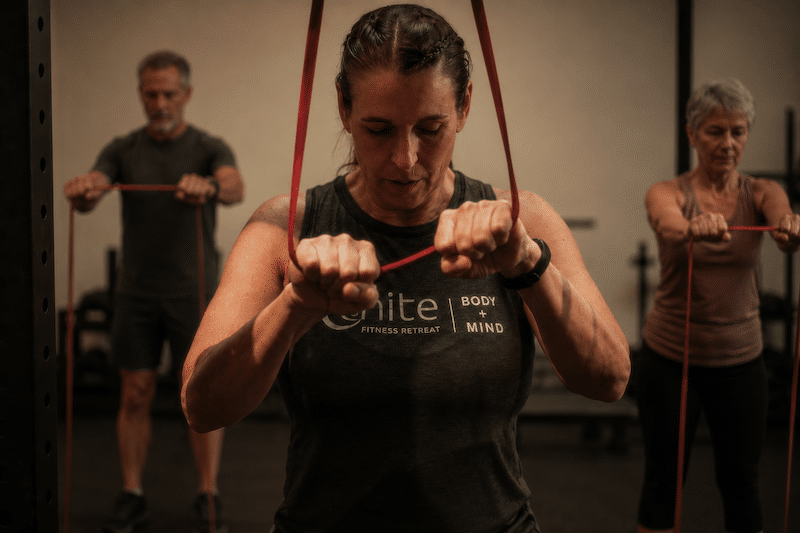
The three main program types each take a different approach to that immersion. Boot camp-style programs are workout-forward and highly structured, emphasizing volume, intensity, and discipline. Weight-loss retreats balance fitness with nutrition education, mindfulness, and recovery programming. Fitness spa retreats prioritize recovery and holistic wellness over exercise volume, with lower physical intensity overall. Some programs blend all three categories. Unite Fitness Retreat, Adult Fat Camp in Salt Lake City, for example, pairs boot camp-level fitness structure with chef-prepared nutrition, daily Wasatch Mountain hikes, and recovery sessions in a small-group boutique setting, drawing from all three models without being purely any one of them. It’s a useful example of what a well-rounded adult weight-loss program for adults can look like in practice.
Choosing an Adult Fitness Camp: What a Typical Day Looks Like
Most live-in programs build the day around a similar rhythm. Mornings start early: wake-up, hydration, and often a light warm-up or yoga session before the first meal. That’s followed by the primary workout block, typically one to several hours of cardio, HIIT, boxing, weight training, or group fitness classes calibrated to your fitness level. Structured mornings like this eliminate the daily decision fatigue that derails most home programs before 9 a.m.
The midday block shifts toward nutrition. Many programs build in dietitian-led cooking demonstrations, group lectures on portion control, or habit-coaching sessions between the morning and afternoon workouts. A second training block follows in the afternoon, sometimes swapping gym-based work for outdoor activities like hiking or cycling. This dual-session format is how many quality adult bootcamp retreats accumulate well over 300 minutes of exercise per week, a threshold that research directly links to meaningfully greater fat loss and waist circumference reduction. For readers wondering how these programs differ in focus and delivery, a useful primer on what to expect at a fat camp for adults outlines common programming and emphasis areas.
Evenings focus on recovery and mindset. After dinner, most programs include a stretching session, spa time, journaling, or a mind-body class. Some wrap the day with a group discussion about habit-building or meal planning for life after the retreat. The difference between this and a 60-minute gym visit is the scope: a full camp day addresses fitness, nutrition, and mindset within a single contained environment, compressing months of piecemeal effort into a focused, supported week.
Realistic results: what the research actually shows
The most useful benchmark comes from a meta-analysis of 116 randomized clinical trials involving adults with overweight or obesity. At 150 minutes of aerobic exercise per week, participants lost roughly 2.79 kg of body weight. At 300 minutes per week, that rose to 4.19 kg and a 4.21 cm reduction in waist circumference. Many fitness retreat programs for adults structure multiple daily training blocks that push weekly activity well above 300 minutes in a combined aerobic and resistance format, though total volume varies by program. When you layer a structured caloric deficit from dietitian-planned meals on top of that exercise volume, results compound meaningfully within a one-to-two-week stay.
The scale, though, tells only part of the story. Research on resistance training combined with caloric restriction shows reductions of roughly 3.8% in body fat percentage and approximately 5.3 kg in whole-body fat mass in pooled analyses. Reputable programs track body fat percentage, waist circumference, resting heart rate, and fitness test performance, not just morning weigh-ins. Energy levels are also commonly self-reported by participants as a meaningful progress indicator. If a program you’re considering doesn’t track multiple metrics, that’s worth noting. A single number on a scale doesn’t capture what’s actually changing inside your body.
Self-reported results from immersive programs frequently cite averages of three to four pounds lost per week, with better-designed programs showing that the majority of that loss comes from fat rather than lean muscle. Those figures are self-reported and vary widely depending on starting weight, program intensity, and individual metabolism; treat them as directional rather than guaranteed. For examples of published rates and participant stories from adult obesity camps, look to resources that collect camp outcomes and testimonials, such as adult obesity camp rates and success stories. What is consistent across the research is that structured, high-volume programs with nutrition support outperform standalone gym memberships and diet plans on measurable short-term outcomes.
What separates a standout camp from an average one
The single most overlooked metric when comparing programs is the staff-to-guest ratio. A large camp running 60 guests with 6 staff members gives each person about ten minutes of individual attention per hour of group activity. That’s delivery at you, not design for you. Smaller staff-to-guest ratios, for example, around 5-to-1, are what allow a program to genuinely personalize your workouts, your meals, and your coaching sessions. Unite Fitness Retreat operates at that boutique scale at their Wasatch Mountain location, and that kind of individualized attention directly determines whether you’re following a generic program or one built around your body, your history, and your goals.
Safety screening and staff credentials matter just as much. Responsible programs require a pre-arrival health history review, a PAR-Q or equivalent cardiovascular and metabolic risk screen, and verified credentials across their team: certified personal trainers, registered dietitians, and life coaches where applicable. Industry guidelines from organizations like the American College of Sports Medicine recommend that CPR-certified personnel be present during exercise sessions and that written emergency protocols be in place. For specifics on medical clearance and required on-site exams many camps request, see a practical summary of a camp physical medical exam. These are not premium add-ons; they’re baseline safety standards that any credible adult fitness camp should meet.
Watch for the red flags of underprepared programs: no intake screening, generic group workouts delivered at a single intensity regardless of fitness level, and no post-retreat support plan. A program that doesn’t assess you before you arrive can’t adapt the program to you once you’re there. And a program that sends you home without tools for maintaining progress has only solved half the problem.
How to match the right camp type to your goals
The right program depends on where you’re actually starting from, not just what sounds most intense in a brochure. Here’s how the most common situations map to program types: If you’re still unsure which direction to take, our fitness camp choices guide walks through the trade-offs between program types and typical guest profiles.
- Fast fat loss with high accountability: A structured adult bootcamp retreat fits best. High exercise volume, strict scheduling, and daily accountability are the primary drivers.
- Hormonal changes, menopause, or midlife fatigue: Look for a fitness retreat for adults that includes dietitian-led nutrition support and recovery programming built into the daily schedule. Research on menopause and body composition suggests that programs combining resistance training, nutrition guidance, and recovery tend to produce better results than cardio volume alone, hormonal changes in midlife are complex, and metabolic support matters.
- Burnout, chronic stress, or emotional weight: A retreat integrating life coaching, mindfulness, and digital detox alongside fitness will produce more durable results than exercise volume alone. The mental reset is part of the physical one.
- Results-driven vacation alternative: A scenic all-inclusive retreat with outdoor programming, like mountain hiking, checks both the fitness progress and the experience box without sacrificing either.
-
On cost: budget programs run roughly $1,500 to $3,000 per week and typically offer limited staff, shared facilities, and less individualized programming. Mid-range programs fall between $3,000 and $6,000 per week with more personalized design. Premium boutique programs run $6,000 to $9,000 or more per week, with small groups, high staff ratios, and full-service amenities. All-inclusive pricing can compare favorably to the combined monthly cost of a gym membership, meal prep service, therapy, and a personal trainer, particularly for people who factor in the concentrated intensity of one focused week versus months of inconsistent, piecemeal effort.
If you want to review current options and curated lists, see a recent roundup of the best fitness retreats for adults in 2026:
| Retreat | Location | Best for | Why it stands out |
|---|---|---|---|
| Unite Fitness Retreat | Salt Lake City, Utah | All-inclusive adult fitness + weight-loss reset | Boutique adult-focused, all-inclusive, year-round retreat with 3-day to 20-week stays, private accommodations, and a structured fitness/weight-loss positioning including longevity, GLP-1 support and an emphasis on on mindfulness |
| Premier Fitness Camp | Carlsbad, California | Luxury fitness camp with Golf & Spa | Located at Omni La Costa; 2026 pricing coverage describes an all-inclusive weekly model around training, meals, accommodations, and spa |
| Hilton Head Health | Hilton Head Island, South Carolina | Lifestyle change + sustainable weight management | Long-running adult wellness resort focused on fitness, nutrition, mindfulness, behavior change, and weight management; FitStays notes it is open to adults 18+. |
| Movara Fitness Resort | Ivins, Utah | Immersive weight-loss and fitness reset | All-inclusive resort with guided hikes, nutrition education, and lifestyle reset in Southern Utah. |
| Mountain Trek Health Reset Retreat | British Columbia, Canada | Hiking-based health reset | Week-long immersive retreat emphasizing transformation, with Condé Nast noting small-group day-long hikes and sunrise yoga. |
| The Ranch Malibu | Malibu, California | High-end, rigorous outdoor fitness | 6- to 8-night luxury retreat on 200 coastal acres with multi-hour hikes, afternoon fitness, yoga/meditation, plant-forward meals, and daily massage. |
| The Ranch Hudson Valley | New York | East Coast luxury hiking retreat | Esquire’s 2026 wellness-resort list highlights it as a newer, more approachable Ranch concept with daily hikes, plant-based meals, and an intimate group format. |
| Canyon Ranch | Tucson, Lenox, Austin, etc. | Personalized luxury wellness + fitness | Holistic resort with expert-guided personalization; Vogue’s 2026 spa guide calls Canyon Ranch a number one pick in wellness resorts. |
| BodyHoliday | Saint Lucia | Fitness vacation with Caribbean resort feel | All-inclusive wellness resort with fitness, spa, and activity programming; recent coverage highlights a full daily schedule of workouts, water sports, and spa inclusions. |
| SHA Wellness Clinic | Spain / Mexico | Medical wellness, longevity, weight management | High-end integrative wellness clinic with programs around longevity, preventive medicine, performance, detox, and weight management; Esquire’s 2026 list highlights SHA Mexico among notable new wellness resorts. |
| Active Escapes | Bali, Maldives, Greece, Australia, NZ, Thailand, etc. | Social destination fitness travel | Destination-based fitness retreats combining training, food, and group travel in scenic locations. |
Questions to ask every retreat before you commit
Before you enter a credit card number, you need clear answers to a specific set of questions. These aren’t gatekeeping, they’re the fastest way to separate well-built programs from underprepared ones. A strong program answers all of them directly and confidently.On program structure and daily logistics, ask: What is the staff-to-guest ratio? Is fitness programming individualized or the same for every guest? Are meals included and customized for dietary restrictions and medical needs? What does a typical daily schedule look like? What happens if I have an injury or a difficult day mid-program?On safety, credentials, and post-retreat support, ask: What certifications do trainers, dietitians, and coaches hold? Is there a medical screening process before I arrive? Who do I contact on-site if I have a health concern during my stay? What post-retreat support is provided to help me sustain results at home? That last question is particularly important. A great adult fitness camp doesn’t end when you check out. It sends you home with an actual plan. For practical tips and a checklist of the most important questions to ask, consult our best fitness camp advice guide.
What the right reset actually looks like
You’re not looking to add another item to a long list of things that didn’t work. You’re looking for a reset that sticks, built on structure and personalization rather than willpower and good intentions. The right adult fitness camp isn’t defined by how extreme its workouts are or how glossy its marketing looks. It’s defined by how well its environment supports lasting change.
The three program types, boot camp-style, weight-loss retreat, and fitness spa, each serve a different need. The non-negotiables apply across all three: a staff ratio that allows genuine personalization, health screening before you arrive, qualified credentialed staff, and a support plan for after you leave. Get those four things right and the program has the foundation to work.
Unite Fitness Retreat was built around exactly that framework: boutique-scale attention, performance-forward programming, chef-prepared nutrition, daily mountain hikes in the Wasatch, and recovery built into every day. If you’re ready to explore what that kind of structured reset looks like in practice, see how that framework translates into a real week. Arriving home with real tools and real momentum feels very different from arriving home with a gym bag and good intentions.
Call 1-844-864-8388 to set up your complimentary consultation today!