
Low Impact Fitness Retreat
By: Wayne Larsen, Certified Strength and Conditioning specialist and Weight Loss Expert, Unite Fitness Retreat
Low-Impact Fitness Retreats: Can You Attend With Knee, Back, or Joint Pain?
A low-impact fitness retreat can be a good option for adults with knee pain, hip discomfort, arthritis, or certain types of back pain—provided the program can accommodate their needs and their healthcare provider approves participation. The right retreat should offer appropriate exercise modifications, strength training, cardiovascular activity, recovery, and personalized guidance without expecting every guest to perform the same workout.
Let’s address something that comes up more often than you might think.
You want to get healthier. You’re ready to exercise, lose some weight, rebuild strength, and perhaps feel like yourself again.
There’s just one problem.
Your knees have opinions.
Your back occasionally files a complaint.
And somewhere along the way, getting out of a low chair became considerably more complicated than it used to be.
Sound familiar?
If you’ve considered attending a fitness retreat but worried that your joints won’t cooperate, you’re not alone.
At Unite Fitness Retreat in Salt Lake City, Utah, we work with adults who have different fitness histories, abilities, and physical limitations.
Our approach emphasizes personalized strength training, cardiovascular fitness, mobility, recovery, and sustainable wellness habits.
But here’s an important distinction: Unite is an active fitness retreat, not a physical therapy clinic or medical rehabilitation center. Whether our program is appropriate depends on your health, your medical clearance, and the modifications you need.
Let’s explore what low-impact fitness really means, why strength training may be particularly important for joint health, and how to decide whether a fitness retreat is right for you.
Key Takeaways: Low-Impact Fitness Retreats and Joint Pain
- Low-impact doesn’t mean ineffective. You can improve strength, cardiovascular fitness, and mobility without high-impact exercise.
- Exercise can benefit many adults with arthritis. Appropriate physical activity can help reduce pain and stiffness and improve everyday physical function.
- Personalization matters. Exercises may need to be adjusted based on the affected joint, diagnosis, symptoms, and your healthcare provider’s guidance.
- Strength training supports joint function. Stronger surrounding muscles help support movement and everyday activities.
- Cardio doesn’t have to involve running. Walking, cycling, swimming, and other low-impact activities may be appropriate depending on individual needs.
- Pain shouldn’t be ignored. Sharp pain, worsening swelling, instability, or other concerning symptoms require attention.
- Not every retreat is suitable for every condition. Ask about the physical demands, activity modifications, and medical requirements before booking.
- Unite Fitness Retreat offers personalized exercise and recovery activities within a structured, all-inclusive residential fitness program in Salt Lake City, Utah.
Can You Attend a Fitness Retreat With Knee, Back, or Joint Pain?
For many adults, the answer is yes.
But the details matter.
There’s an important difference between someone who has occasional knee stiffness and someone recovering from knee replacement surgery.
The same goes for mild, recurring back discomfort versus an active spinal injury or worsening nerve symptoms.
One person might comfortably participate in a modified strength session.
Another might need physical therapy or medical treatment before considering an active retreat.
The goal isn’t to push through whatever hurts.
It’s to find an appropriate way to improve your fitness while respecting your body’s limitations.
According to the Centers for Disease Control and Prevention, regular physical activity can help many people with arthritis reduce joint pain and improve physical function, mood, and overall quality of life.
The CDC recommends activities that are enjoyable, manageable, and place relatively little stress on the joints.
And here’s some welcome news.
You don’t need to be an athlete to benefit.
You just need an appropriate starting point.
Before attending Unite, we ask guests to obtain their doctor’s consent to participate in our fitness program. If you have ongoing joint pain, a diagnosed orthopedic condition, or an injury, discuss your limitations with your healthcare provider and our team before booking.
What Exactly Is a Low-Impact Fitness Retreat?
A low-impact fitness retreat emphasizes exercise options that minimize repetitive pounding, jumping, and unnecessary stress on the joints.
But don’t confuse low-impact with low-intensity.
They’re not the same thing.
Low-impact describes the forces and movements involved in an activity.
Low-intensity describes how physically demanding that activity feels.
For example, a stationary bicycle can provide a gentle, low-intensity workout.
But increase the resistance and pace, and cycling can become quite challenging—without the repetitive impact of running.
Similarly, a properly modified strength-training routine can challenge your muscles while avoiding certain high-impact movements.
A good low-impact fitness program may include:
- Walking on appropriate surfaces
- Stationary cycling
- Modified strength training
- Resistance-band exercises
- Balance and stability training
- Gentle mobility work
- Appropriate yoga or stretching
- Recovery and relaxation sessions
Swimming and water-based exercise can also be useful options at some facilities, although availability should always be confirmed.
The key is matching the activities to the person.
Not the other way around.
Why Joint Pain Can Make Getting Back Into Shape Feel So Difficult
Here’s a frustrating cycle many people recognize.
Your knees hurt, so you exercise less.
Because you’re exercising less, your strength and stamina decline.
Then everyday activities start feeling harder.
Which makes you even less interested in exercising.
And the cycle continues.
The answer isn’t to ignore the pain.
But avoiding all movement isn’t necessarily the solution either.
The National Institute of Arthritis and Musculoskeletal and Skin Diseases explains that appropriate exercise can help improve muscle strength, joint flexibility, endurance, and physical function for people with osteoarthritis.
Movement can be beneficial when it’s selected and progressed appropriately.
Why Strength Matters
Think about the muscles surrounding your knees and hips.
Your quadriceps, hamstrings, glutes, and other muscles contribute to walking, standing, climbing stairs, and maintaining balance.
Strengthening these muscles can improve physical capacity and help support the joints during daily activities.
For your back, appropriate strengthening and movement may also be part of managing certain types of discomfort.
But exercise selection depends on the cause of the pain.
Not every squat, stretch, or core exercise is appropriate for every condition.
That’s why proper instruction and individual modifications are so important.
The goal isn’t simply to exercise more. It’s to move better, become stronger, and build confidence in what your body can do.
The Best Low-Impact Exercises for Adults With Joint Pain
There is no single exercise routine that works for every person with joint pain.
But several types of activity are commonly recommended for maintaining or improving fitness while limiting unnecessary joint stress.
1. Walking: A Simple Place to Start
Walking is one of the most accessible forms of exercise.
It doesn’t require complicated equipment, and the pace and duration can be adjusted.
For some people, that might mean a five-minute walk.
For others, it might mean 30 minutes of brisk movement.
Both can be valuable starting points.
Walking can help improve cardiovascular fitness, endurance, and everyday function.
However, if walking changes your gait, causes worsening pain, or makes you limp, a medical or physical therapy evaluation may be appropriate before increasing activity.
And remember, walking on a level surface is different from hiking up a rocky mountain trail.
We’ll talk more about that shortly.
2. Stationary Cycling
Cycling is often a practical low-impact alternative to activities that involve repetitive landing forces.
Depending on the person and the equipment, it may allow cardiovascular training with less impact on weight-bearing joints.
The seat position, resistance, and range of motion still matter.
Cycling isn’t automatically comfortable or appropriate for every knee or hip condition.
A trainer can help with general exercise setup and adjustments within the limitations provided by your healthcare professional.
3. Modified Strength Training
Strength training doesn’t have to mean heavy barbells and complicated gym routines.
And you definitely don’t have to squat as deeply as the person next to you.
Depending on your abilities and medical guidance, exercises might include:
- Sitting and standing from a sturdy bench
- Supported partial squats
- Resistance-band rows
- Seated upper-body exercises
- Light resistance-machine movements
- Modified step-ups
- Appropriate core and stability exercises
These are examples, not a prescribed exercise plan.
The correct exercise and range of motion depend on the condition being addressed.
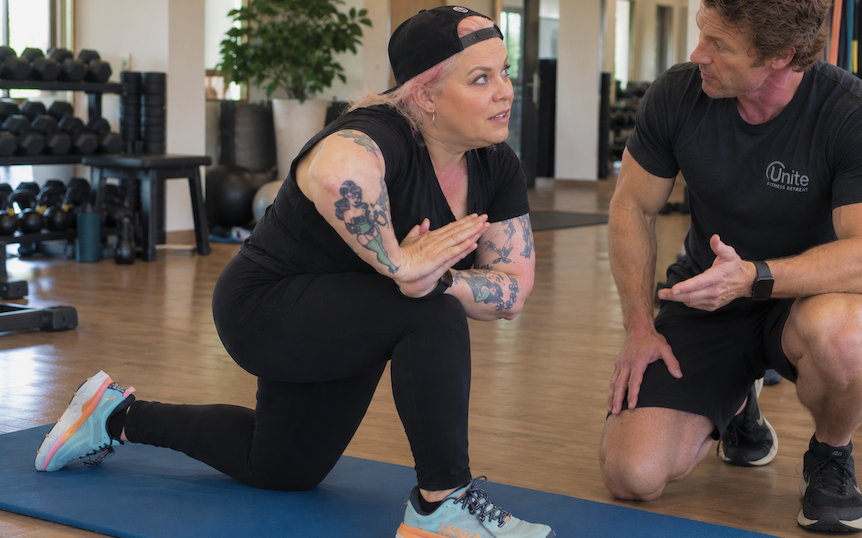
At Unite, strength training is a central part of our fitness and exercise program, and our trainers can modify many activities for guests with different abilities.
4. Mobility and Flexibility Training
Sometimes, improving movement quality is just as important as increasing strength.
Mobility activities may help people become more comfortable with everyday movements.
Appropriate yoga, stretching, and range-of-motion exercises may be useful components of a well-rounded program.
However, certain positions can aggravate particular conditions.
For example, someone with significant knee pain may struggle with prolonged kneeling.
Someone with a spinal condition may need to avoid certain bending or twisting movements.
The goal should never be to force your body into a position simply because everyone else is doing it.
5. Balance and Stability Exercises
Balance training is particularly valuable for many older adults.
Activities that challenge balance appropriately can help improve confidence with movement and support everyday function.
Depending on individual ability, this might involve standing with support, controlled weight shifts, or other trainer-guided movements.
If you experience frequent falls, dizziness, or significant instability, seek medical evaluation before joining activities that challenge your balance.
What if You Have Bad Knees?
Let’s talk specifically about knees.
Because they’re frequently the first thing people mention when they’re worried about attending a fitness retreat.
Maybe you have osteoarthritis.
Maybe you’ve had surgery in the past.
Maybe stairs have become uncomfortable.
Or perhaps you’ve simply noticed that your knees don’t tolerate certain exercises as well as they once did.
The first step is understanding why your knees hurt.
A trainer can help modify fitness activities, but a trainer cannot diagnose the cause of unexplained knee pain.
Once you have medical guidance, you may be able to work on strength, endurance, and movement through appropriate exercise.
For example, depending on your condition, modifications might involve:
- Reducing squat depth
- Using a chair or bench for support
- Choosing a lower-impact cardiovascular activity
- Adjusting resistance and repetitions
- Avoiding movements that produce worsening symptoms
- Allowing more recovery between sessions
The idea isn’t to avoid using your legs.
It’s to find activities that challenge them appropriately.
And no, we don’t believe a workout is only successful if you have to crawl down the stairs afterward.
What if You Have Back Pain?
Back pain requires a little more individual consideration because it can have many different causes.
Muscular discomfort, previous injuries, spinal conditions, and nerve-related symptoms don’t all respond to the same activities.
For many types of uncomplicated back pain, remaining appropriately active can be helpful.
The UK’s National Health Service recommends staying active when possible rather than relying on prolonged bed rest.
But it also emphasizes that worsening pain or concerning neurological symptoms require medical assessment.
If you have persistent back pain, sciatica, spinal stenosis, a disc injury, or a history of back surgery, obtain specific exercise recommendations from your healthcare provider or physical therapist.
A fitness retreat should not be used to self-treat an undiagnosed spinal condition.
At Unite, our trainers can discuss general modifications within your medical restrictions, but we are not a substitute for orthopedic or physical therapy care.
Can You Still Lose Weight With Low-Impact Exercise?
Absolutely. High-impact workouts are not a requirement for weight management.
For adults who would benefit from reducing excess body fat, regular physical activity and sustainable nutrition changes can support progress.
But it’s important to understand that exercise is only one part of the picture.
Nutrition matters.
Consistency matters.
Sleep and recovery matter.
And maintaining muscle during weight loss matters, too.
If you’re experiencing knee or hip discomfort, reducing excess body weight may also lessen stress on weight-bearing joints.
However, weight loss isn’t necessary or appropriate for every person with joint pain.
At Unite, our approach focuses on body composition, strength, nutrition education, and sustainable lifestyle habits rather than simply chasing the lowest possible number on the scale.
Our nutrition program includes chef-prepared meals and education designed to help guests make healthier choices when they return home.
Because long-term health isn’t built on one especially difficult week of exercise.
It’s built on habits you can actually maintain.
How Can a Fitness Retreat Help You Rebuild Confidence With Exercise?
Physical limitations don’t just affect your body.
They can affect your confidence, too.
Perhaps you’ve stopped going to the gym because you’re worried about making an injury worse.
Maybe group exercise classes feel intimidating.
Or perhaps you’ve simply become unsure of what your body is capable of doing.
A structured fitness environment can help some adults become more comfortable with movement when the program matches their needs.
Instead of trying to invent your own routine, you have opportunities to learn appropriate exercise techniques, receive feedback, and practice consistently.
You may discover that certain movements feel better than you expected.
You may also learn that some activities simply aren’t appropriate for you right now.
Both are valuable discoveries.
The point isn’t to prove that you can perform every exercise.
It’s to learn how to improve your fitness intelligently.
What Does a Joint-Conscious Fitness Experience Look Like at Unite?
Unite Fitness Retreat is a boutique, all-inclusive residential fitness and weight loss retreat located in Salt Lake City, Utah.
Our program combines personalized exercise, nutrition education, outdoor adventures, mindfulness, and recovery.
We welcome adults with a wide range of fitness backgrounds and goals.
Some are already physically active.
Others are returning after years away from structured exercise.
Some want to improve their strength and stamina as they age.
Others are looking for a meaningful lifestyle reset.
Personalized Training
Our fitness program incorporates strength and conditioning, cardiovascular exercise, balance, mobility, and recovery.
Many exercises can be modified to match different fitness levels.
However, the retreat is structured and active. We cannot guarantee accommodations for every medical condition or physical restriction.
A Boutique Setting
Unite maintains a maximum capacity of 30 guests for men and women of all ages and fitness levels.
Our relatively small group environment allows opportunities for more personalized interaction with trainers and staff.
You won’t be expected to compete with every person in the gym.
But you should expect to participate in a physically active daily schedule appropriate to the participation requirements established before your stay.
Nutrition and Body-Composition Education
We emphasize balanced eating habits and preserving muscle alongside appropriate fat-loss goals.
Our program includes chef-prepared meals, nutrition guidance, and fitness assessments.
Mobility, Recovery, and Mindfulness
Exercise is important, but so is giving your body appropriate time to recover.
Unite’s program includes activities such as yoga, stretching, mobility work, mindfulness and optional sessions with our physical therapist and chiropractor.
Not every recovery activity will be appropriate for every condition, so modifications and restrictions should be discussed in advance.
Outdoor Adventures
One of the highlights of Unite is our proximity to Utah’s Wasatch Mountains.
Our guided hiking program includes different trail options and intensity levels.
However, even an easier mountain hike may involve uneven terrain, elevation changes, and physical demands that aren’t suitable for everyone.
If you have knee pain, hip problems, back concerns, or difficulty walking long distances, talk with our team before booking. Do keep in mind, we offer physical therapy if you are recovering from an old injury, we recommend time with our physical therapist while participating in the retreat.
We can discuss the current program and assess whether the available activities can accommodate your limitations.
And while we’d love everyone to enjoy Utah’s beautiful mountains, we won’t suggest that a challenging hike is automatically appropriate just because the scenery is beautiful, a more suitable option may be low impact exercise in the pool.
Is Unite a Joint Rehabilitation Retreat?
No, and we believe this distinction is important.
Unite is a fitness and wellness retreat.
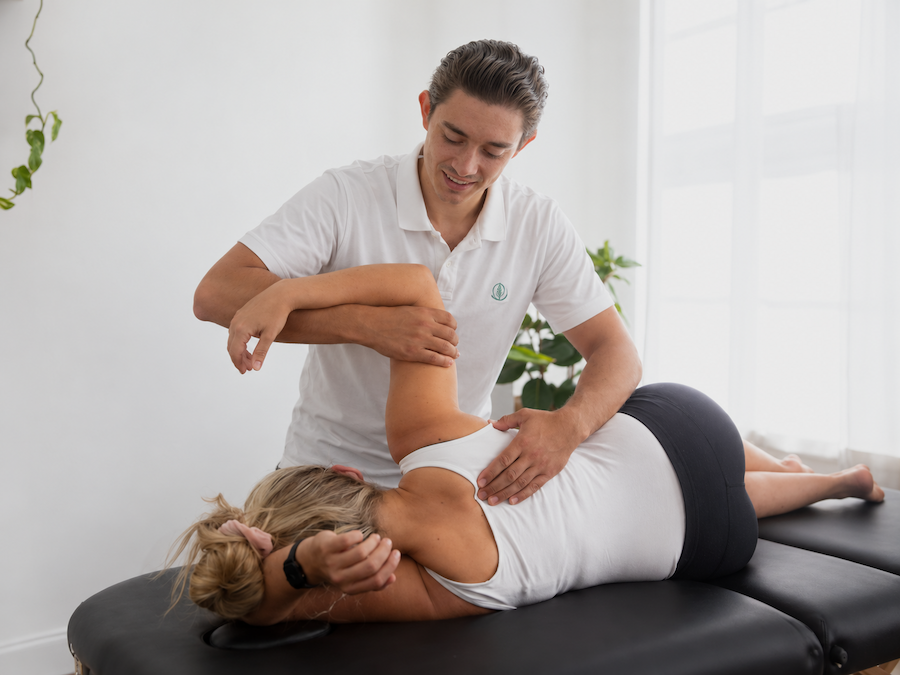
We provide structured exercise, lifestyle coaching, nutrition education, and recreational activities along with optional physical therapy, chiropractic care and massage therapy.
We do not replace orthopedic specialists or rehabilitation programs.
If you’re recovering from surgery, have an unstable joint, experience severe pain, or require supervised medical rehabilitation, your healthcare provider should determine when you’re ready for a general fitness program.
In some cases, completing physical therapy at home or receiving medical treatment should come before attending a retreat.
Our goal is to help you find an appropriate experience—not encourage you to participate in something that isn’t right for your health.
How Do You Know if Exercise Is Making Joint Pain Worse?
This is an important question.
A little muscle soreness after beginning a new routine can be normal.
But worsening joint pain shouldn’t simply be ignored.
The CDC recommends adjusting activity and consulting a healthcare provider when symptoms are severe or aren’t improving.
Stop the activity and seek medical guidance if you experience:
- Sharp, stabbing, or persistent joint pain
- Pain that makes you limp
- Increasing swelling or significant joint warmth
- Pain that continues worsening after exercise
- A joint that suddenly gives way
- New numbness, weakness, or other concerning neurological symptoms
A suddenly hot, swollen joint accompanied by fever or feeling unwell needs urgent medical assessment. Severe pain after an injury or inability to bear weight may also require urgent evaluation.
If back pain is accompanied by new bladder or bowel problems, numbness around the groin, or new significant weakness in both legs, seek emergency medical care.
Your healthcare provider can help distinguish manageable exercise-related discomfort from symptoms that require treatment.
The goal is to improve your health—not to push through warning signs.
Seven Questions to Ask Before Booking a Fitness Retreat With Joint Pain
Before booking a retreat, we’d encourage you to ask the following questions.
1. Does the program offer exercise modifications?
Ask for examples of how activities are changed for guests with mobility limitations.
2. What qualifications do the trainers have?
Look for experienced professionals who understand exercise technique, gradual progression, and appropriate modification.
3. How physically demanding is the daily schedule?
Find out how much activity is expected and which parts of the program require sustained effort.
4. Are low-impact cardiovascular options available?
Ask about equipment such as stationary bikes and whether suitable alternatives are available for particular activities.
5. What happens if I cannot participate in a hike?
This is particularly important at mountain-based retreats.
Don’t assume you can skip or replace activities without discussing it first.
6. What medical clearance is required?
Understand whether your healthcare provider needs to approve your participation and document any restrictions.
7. Is the retreat designed for general fitness or medical rehabilitation?
If you need medical treatment or physical therapy, choose a program appropriately equipped to provide it.
The right retreat should welcome honest questions.
And if the answers don’t give you confidence that the program can meet your needs, keep looking.
How to Prepare for a Fitness Retreat if You Have Joint Pain
A little preparation can make your experience more comfortable.
Speak With Your Healthcare Provider
Explain the activities involved, including strength training, cardiovascular exercise, and outdoor hiking.
Ask which movements or intensity levels are appropriate for your condition.
If you’re in physical therapy, discuss whether you’re ready for a residential fitness program.
Share Your Health History With the Retreat
Tell the team about:
- Previous surgeries or injuries
- Diagnosed arthritis or spinal conditions
- Current pain and mobility restrictions
- Medications that affect exercise or balance
- Braces or assistive devices
- Activities your healthcare provider has advised you to avoid
Being honest helps the retreat determine whether the program is appropriate.
Bring Comfortable Footwear
Well-fitting, supportive shoes can make a meaningful difference for walking and everyday movement.
If you use medically recommended orthotics or supports, follow your healthcare provider’s instructions.
Don’t Try to Get Fit Overnight
You don’t need to squeeze six months of exercise into the two weeks before your retreat.
If you’ve been cleared to exercise, gradually increasing manageable daily movement is a more sensible approach.
Set Realistic Goals
Your goals don’t have to revolve around losing weight.
You might want to:
- Walk farther with greater confidence
- Improve your strength
- Feel more comfortable participating in exercise
- Develop a sustainable routine
- Improve balance and everyday mobility
- Learn which workouts suit your current abilities
These are worthwhile goals.
And improvements in physical function can be meaningful even when they happen gradually.
For more preparation advice, visit our fitness retreat for beginners guide.
Frequently Asked Questions About Low-Impact Fitness Retreats
Can I attend a fitness retreat if I have arthritis?
Possibly, yes. Many adults with arthritis can participate in appropriate exercise programs, and regular activity can help improve pain and function. Your specific diagnosis, symptoms, medical clearance, and the retreat’s ability to accommodate you should guide the decision.
What is the best exercise for bad knees?
There is no universal best exercise. Walking, cycling, and appropriately modified strengthening movements may be suitable for some people. Your healthcare provider or physical therapist can help identify exercises that match your knee condition and symptoms.
Can I attend a retreat after knee or hip replacement surgery?
Only after your surgeon or rehabilitation professional has approved the relevant activities and the retreat has confirmed it can accommodate your restrictions. Unite is not a postoperative rehabilitation facility.
Can I still build muscle without high-impact exercise?
Yes. Strength training doesn’t require jumping or running. Appropriate resistance exercises using weights, machines, bands, or body weight can help improve muscular strength.
Are low-impact workouts effective for weight loss?
They can support healthy weight management when combined with sustainable nutrition and other appropriate habits. Individual results vary, and high-impact exercise is not necessary for everyone.
Does low-impact mean the workouts are easy?
Not necessarily. Low-impact describes how much repetitive impact an activity places on the body, not how challenging it feels. Stationary cycling and resistance training can be demanding while remaining relatively low-impact.
Is yoga good for joint pain?
Appropriately selected yoga and mobility exercises may help some people maintain flexibility and function. However, certain poses can aggravate specific conditions. Discuss restrictions with your healthcare provider and use suitable modifications.
Can I hike if I have knee pain?
It depends on the cause and severity of the pain, the terrain, and your physical ability. Uneven trails and downhill walking can be challenging. Obtain medical guidance when needed and discuss hiking expectations with the retreat before booking.
Does Unite offer only low-impact workouts?
No. Unite offers a range of fitness activities, including strength training, cardio, group exercise, hiking, and recovery. Many exercises can be modified, but the overall program remains physically active and may not accommodate every medical restriction.
Do I need my doctor’s approval before attending Unite?
Yes. Unite advises prospective guests to obtain their doctor’s consent before beginning its fitness program. If you have joint pain, recent surgery, or medical limitations, discuss the program’s specific demands with your provider.
Is one week enough to improve my mobility?
One week can provide an introduction to appropriate exercises, coaching, and healthier routines, but there’s no guaranteed timeline for mobility improvements or joint-pain relief. Longer-term progress usually depends on consistent activity and individualized care.
Is a fitness retreat suitable for people over 60 with joint pain?
It may be suitable for some adults over 60, depending on their health, physical abilities, and the program’s activities. Age alone doesn’t determine suitability. Medical clearance and appropriate exercise modifications matter more.
Your Joints Don’t Have to Be Perfect to Start Improving Your Fitness
If you’ve spent years putting off exercise because your knees, back, or hips don’t feel as good as they used to, here’s something we’d love you to remember:
Getting healthier doesn’t have to mean doing everything the hard way.
You don’t have to run.
You don’t have to jump.
And you certainly don’t have to force yourself through an exercise that makes your condition worse.
What matters is finding movement that’s appropriate for your body, receiving good guidance, and building healthy habits you can maintain.
For some people, a fitness retreat provides the structure and encouragement they need to begin.
For others, the right first step is medical evaluation or physical therapy.
Both are valid paths toward better health.
At Unite, we want people to feel stronger, more capable, and more confident in their bodies—not pressured to perform beyond their abilities.
And sometimes the most meaningful change isn’t a number on the scale.
It’s realizing that everyday life feels a little easier.
Ready to Explore Whether Unite Is Right for You?
At Unite Fitness Retreat in Salt Lake City, Utah, we help adults build strength, improve fitness, develop healthier nutrition habits, and work toward long-term wellness goals.
Our boutique, all-inclusive retreat combines:
- Personalized fitness and strength training
- Cardiovascular exercise
- Mobility and recovery
- Guided outdoor activities
- Chef-prepared nutrition
- Mindfulness and lifestyle coaching
If you’re concerned about knee pain, back discomfort, arthritis, or another physical limitation, let’s discuss your needs before you book.
Our team can explain the activities, potential modifications, and medical clearance requirements so you can make an informed decision.
You don’t have to arrive in perfect shape. You do need a program that’s appropriate for your health.
Schedule a Complimentary Consultation With Unite
Explore Our Fitness and Exercise Program
View Current Retreat Rates and Dates
Or call 844-864-8388 to speak directly with our team.
Come As You Are. Leave Stronger.
Medical disclaimer: This article is for educational purposes and does not provide a diagnosis, individualized exercise prescription, or medical clearance. Consult your healthcare provider before starting a new fitness program if you have joint pain, a recent injury, surgery, or other relevant medical concerns. Unite Fitness Retreat is not a medical rehabilitation facility.