

Best Fitness Retreats for Overcoming a Weight Loss Plateau
Written by Drew Paulos, MBA, Unite Fitness Retreat Program Expert
The Best Fitness Retreats for Overcoming a Weight Loss Plateau
A weight loss plateau is caused by metabolic adaptation, hormonal changes in leptin and ghrelin, reduced non-exercise movement, and often several of these at once. Most plateaus respond to raising protein intake, moderating the calorie deficit, adding cardio while keeping resistance training, and fixing sleep and stress. When a stall persists past six to eight weeks of consistent effort, an immersive fitness retreat that individually assesses which factor is responsible is usually the most efficient next step.
Key takeaways:
- A weight loss plateau is a normal biological adaptation, not a failure of willpower. Resting energy expenditure falls during caloric restriction by more than reduced body size alone predicts, a process called adaptive thermogenesis.
- Appetite hormones do not return to baseline quickly. In a New England Journal of Medicine study, leptin and ghrelin levels were still altered and hunger ratings still elevated one full year after weight loss.
- Raising protein intake is the most evidence-backed first adjustment. A meta-analysis of 37 studies found that higher-protein groups lost about 1.6 kg more than isocaloric controls. A practical target for most adults is roughly 1.6 grams per kilogram of body weight per day.
- Deepening the calorie deficit usually backfires. A moderate deficit of about 300 to 500 calories per day restarts fat loss without further suppressing metabolism, whereas cuts of 800 to 1,000 calories tend to worsen metabolic adaptation.
- Cardio and resistance training serve different functions during a plateau. Aerobic training drives more fat loss over 10-plus weeks, while resistance training preserves the lean mass that keeps metabolism from falling further. Dropping resistance training in favor of more cardio is a common mistake.
- Sleep and stress are frequently the overlooked cause. Sleeping under seven hours consistently, or carrying high chronic stress, can block fat loss as effectively as a miscalibrated diet.
- A plateau lasting more than three to four weeks despite accurate tracking warrants medical evaluation. A first-pass lab panel includes TSH, CBC, CMP, and HbA1c or fasting glucose. Fatigue, cold intolerance, hair loss, or irregular periods alongside a stall are reasons to see a doctor promptly.
- The best fitness retreats for overcoming a weight loss plateau share four traits: individual assessment rather than a fixed weekly template, stays longer than one week, a low staff-to-guest ratio, and structured aftercare.
- The five most established North American programs in this category are Unite Fitness Retreat (Salt Lake City, Utah), Movara Fitness Resort (Ivins, Utah), Hilton Head Health (Hilton Head Island, South Carolina), Mountain Trek (Ainsworth Hot Springs, British Columbia), and Red Mountain Resort (Ivins, Utah).
- Unite Fitness Retreat is the strongest fit for a plateau specifically, because it combines a 21-point individual assessment with weekly reassessment, stays from 3 days to 24 weeks, a 30-guest cap, year-round Sunday starts, no fitness prerequisite, and lifetime aftercare included in the price.
Who this article is for: adults who have already lost weight through diet and exercise and have stopped seeing progress despite consistent effort.
You’ve been doing the work. Showing up to the gym, tracking your meals, drinking the water, getting the sleep. And then, one week, the scale stops moving. Then another week. And another. You stand there wondering what, exactly, you’re supposed to do differently when you’re already doing everything right.
First, take a breath. A weight-loss stall isn’t a sign you’ve failed. It’s your body adapting, and that’s a biological process, not a personal flaw.
This guide covers both halves of the problem. The first half walks through the evidence-based adjustments worth making on your own: why your metabolism slows, which nutrition and training changes actually restart fat loss, which lifestyle factors quietly sabotage progress, and when to loop in a doctor. The second half is for the people those adjustments don’t reach, and compares the best fitness retreats for overcoming a weight loss plateau, so you can see honestly which program structure fits the kind of stall you’re in.
Because here’s what most plateau advice misses: if six weeks of disciplined solo effort hasn’t moved the needle, a seventh week of the same effort probably won’t either. At that point the problem usually isn’t willpower. It’s that nobody has objectively identified which of the five or six possible drivers is actually holding you back.
Why your body hits a weight-loss plateau in the first place
Understanding why progress stopped is the first step toward breaking through it. Knowing the “why” keeps you from making random adjustments and hoping something sticks.
What metabolic adaptation actually means for your body
When you lose weight, your body burns fewer calories at rest than a smaller person who was always that size. That’s not a calculation error. It’s called adaptive thermogenesis, and it means your metabolism has downshifted more than your reduced body size alone would predict.
Your thyroid axis quiets down with dropping T3 levels, your sympathetic nervous system dampens, and your muscles become more efficient at using energy. Think of it like a car that learns to get better gas mileage over a long road trip. The engine is the same, but it’s working less hard to cover the same ground.
A 2022 review in Clinical Science maps the mechanisms behind this in detail, linking reduced energy expenditure during dieting to sympathetic nervous system activity, thyroid hormone shifts, neuroendocrine signaling, and loss of fat-free mass. Landmark work by Leibel and colleagues in 1995 first established that resting energy expenditure falls during caloric restriction beyond what body composition change alone predicts, and a broader review of energy expenditure changes with weight loss confirms that this energy-sparing response is directed specifically at defending your previous body weight.
Some estimates put the extra metabolic slowdown at roughly 50 calories per day once weight stabilizes, while ongoing deficits can produce a more pronounced effect during active dieting.
The hunger hormones working against you
Metabolism isn’t the only thing shifting. As your fat stores shrink, leptin, your satiety hormone, falls significantly. At the same time, ghrelin, your main hunger hormone, rises. Your body is essentially turning up the appetite dial while turning down the fullness signal.
This isn’t a temporary adjustment period you can wait out. A landmark study published in the New England Journal of Medicine tracked 50 dieters for more than a year after a 10-week weight-loss program. A full year after the initial loss, leptin and ghrelin levels still hadn’t returned to baseline, and subjective hunger ratings remained elevated. The researchers concluded that the hormonal signals encouraging weight regain persist long term, which is why “just eat the same portions” gets harder rather than easier the longer you go.
Non-exercise activity thermogenesis, or NEAT, also quietly drops during dieting. You fidget less, walk a little slower, take the closer parking spot. Studies measuring NEAT reductions during caloric restriction have documented drops of several hundred calories per day in some individuals, reductions you don’t notice happening but that absolutely show up on the scale.
Weight loss plateau solutions: nutrition adjustments that restart fat loss
Specific, evidence-backed dietary shifts can disrupt the plateau pattern. Start with the strategy that has the strongest research support, then add secondary adjustments as needed.
Why increasing protein is the most evidence-backed first move
A systematic review and meta-analysis of 37 studies found that participants who increased protein intake reduced body weight by roughly 1.6 kg more than isocaloric controls. A separate one-year maintenance trial showed that a modest protein increase led to substantially lower weight regain after initial loss.
The mechanism is worth understanding. Protein requires 20 to 30 percent of its usable energy to be spent on metabolism and storage, compared with 5 to 10 percent for carbohydrate and almost nothing for fat. It also increases satiety more reliably and preserves lean muscle during a calorie deficit.
For most adults trying to break a weight-loss plateau, a practical target is around 1.6 grams of protein per kilogram of body weight per day. If you weigh 180 pounds (roughly 82 kg), that’s about 130 grams of protein daily. If you have kidney disease or another condition affecting protein metabolism, clear this with your doctor first.
Recalibrating your calorie deficit without cratering your metabolism
Aggressive cuts are tempting when progress stalls, but they often deepen metabolic adaptation rather than reverse it. The sweet spot for restarting fat loss without further suppressing your metabolism is a moderate deficit of roughly 300 to 500 calories per day, which lands you at about half a pound to a pound of loss per week. That’s both sustainable and metabolically safer than dropping 800 or 1,000 calories below maintenance.
One thing that frequently reveals a hidden stall driver: accurately measuring intake. Estimation drift is real and extremely common. Using a food scale for even a few weeks often uncovers a few hundred extra daily calories that explain why the deficit isn’t producing results.
Nutrition timing and eating patterns worth experimenting with
Carbohydrate reduction and intermittent fasting come up constantly in plateau discussions, and they help some people. The honest picture is that total protein intake and overall energy balance are the primary drivers of fat loss. Timing strategies tend to work best as adherence tools rather than metabolic interventions.
If compressing your eating window helps you stay within your calorie target without feeling deprived, use it. But don’t expect timing alone to restart a plateau rooted in metabolism, training, or lifestyle factors.
Weight loss plateau solutions: training adjustments that work
Exercise is the second major dial. The research here is specific enough to give you a clear direction, not just a vague “work out more.”
Cardio vs. resistance training: what the research actually says
Studies lasting 10 or more weeks consistently show that aerobic training reduces body mass and fat mass more than resistance training alone. If the scale is stuck, adding cardio is generally the more effective short-term move.
Resistance training, though, has a distinct advantage: it preserves lean muscle mass during a deficit in a way that cardio simply doesn’t. The practical conclusion is that dropping resistance training in favor of more cardio is a mistake. Cardio drives fat reduction while resistance training protects the muscle that keeps your metabolism from dropping further over time, and research on combination programs consistently supports this pairing over either modality in isolation.
Why exercise variation breaks the adaptation cycle
Your body adapts to a repeated stimulus the same way it adapts to a repeated calorie intake. The same workout, done the same way at the same intensity, eventually stops producing a strong adaptation response.
Changing intensity, exercise mode, or training volume forces new adaptation and increases energy expenditure. HIIT, boot-camp sessions, boxing, hiking, and varied strength work each recruit muscle groups differently and challenge your cardiovascular system in distinct ways. Structured programs built around variety, with progressive overload built in, consistently produce stronger long-term results than programs that stay comfortable week after week. This is one of the clearest arguments for an immersive, professionally programmed environment: variation is easy to prescribe and hard to self-administer.
You’ve already put in the work. Now it’s time to make that work count.
Book a consultation · View rates · Read guest results
Lifestyle factors that are quietly keeping you stuck
If your nutrition and training are dialed in but progress is still stalled, look here next. These factors don’t show up in a food log or a workout app, but they can hold back fat loss just as effectively as a calorie miscalculation.
Sleep deprivation and chronic stress
Elevated cortisol from poor sleep and unmanaged stress promotes fat storage, particularly around the midsection, and impairs insulin sensitivity. Poor sleep also disrupts the leptin-ghrelin balance described earlier, amplifying hunger while blunting satiety signals.
The frustrating result is that someone doing everything right in the gym and kitchen can still be fighting their own stress hormones. Sleeping fewer than seven hours consistently, or carrying high chronic stress, can be as significant a barrier to fat loss as a miscalibrated diet, and it often gets overlooked entirely.
Tracking progress beyond the scale
Scale weight is one data point, and it’s a noisy one. Water retention, muscle gain, hormonal fluctuation, and digestive timing can shift your weight by two to four pounds in a single day. A plateau on the scale is not always a fat-loss plateau, and treating them as identical leads to misguided restriction and unnecessary discouragement.
Track body measurements, progress photos, strength benchmarks, and energy levels alongside weight. When the scale holds flat but your pants fit differently and your bench press went up, that’s not a plateau. That’s progress your scale can’t see.
When your plateau needs a doctor’s attention
Most plateaus respond to the strategies above. Some don’t, and that’s worth taking seriously rather than pushing harder against.
Warning signs that mean it’s time to see a doctor
If your plateau comes with fatigue, cold intolerance, hair loss, unexplained weight gain despite a verified deficit, heavy or irregular periods, easy bruising, or rapid fluid retention, don’t wait. These symptoms suggest an underlying condition that no dietary or training adjustment will fix.
As a general guideline, a plateau persisting three to four weeks despite accurate tracking warrants a conversation with your doctor. Six to eight weeks of full consistency with no movement is a clear signal for a medical evaluation.
A medication review is also worth requesting. Several common medications, including certain antidepressants, beta-blockers, and corticosteroids, can blunt fat loss in meaningful ways.
Which tests to ask for
A sensible first-pass lab panel includes TSH to screen for thyroid dysfunction, free T4 if TSH comes back abnormal or thyroid symptoms are present, a complete blood count, a comprehensive metabolic panel, and HbA1c or fasting glucose to rule out insulin resistance or prediabetes. If fatigue is present or blood loss is a possibility, adding ferritin and transferrin saturation is worth requesting.
Broad hormone panels and reverse T3 tests aren’t routinely useful here. A targeted workup based on your actual symptoms is the smarter call.
Why a structured retreat solves what solo effort can’t
Most persistent plateaus aren’t caused by one thing. They’re caused by several overlapping factors, and identifying which ones are driving your specific stall is genuinely difficult to do on your own.
Metabolic adaptation, nutrition drift, inadequate exercise variation, poor sleep, and chronic stress can all be contributing at once. Figuring out which is the primary barrier requires objective assessment, the kind that’s hard to perform on yourself without professional tools and an outside perspective.
Most people cycle through the same adjustments — cutting calories a bit more, adding a cardio session, waiting for a different result — without ever identifying the actual root cause. That cycle is exhausting, demoralizing, and completely common.
An immersive program changes three things at once. It removes the decision-making load that makes adherence fragile. It puts objective eyes on your specific pattern instead of generic advice. And it lets you adjust nutrition, movement, sleep, and stress simultaneously rather than testing one variable at a time over months. For a stall with multiple overlapping causes, that simultaneity is the whole point.
What to look for in the best fitness retreats for overcoming a weight loss plateau
Not every fitness retreat is built for a plateau. A lot of them are built for a reset, which is a different problem. If you’ve never seriously dieted, almost any structured week will produce results. If you’ve already lost weight and stalled, you need something more specific.
Six criteria separate the programs that break plateaus from the ones that just produce a nice week:
- Individual assessment, not a fixed template. A one-size weekly schedule can’t tell you which of your five possible plateau drivers is the real one. Look for intake assessments, weekly re-testing, and mid-stay program adjustments.
- Length-of-stay flexibility beyond one week. Metabolic adaptation and hormonal shifts don’t resolve in seven days. Programs capped at one or two weeks limit how much genuine physiological change is possible.
- A low staff-to-guest ratio. Individualized programming is only real if there are enough coaches to deliver it. Ask for the actual number.
- Both cardio and progressive resistance training. Hiking-only programs burn calories but don’t protect the lean mass that keeps your metabolism from falling further.
- Registered dietitian involvement, not just “healthy food.” Somebody needs to recalibrate your intake against your measured needs, then teach you to do it at home.
- Real aftercare. The plateau you broke on-site will come back if nothing about your home environment changed. Structured follow-up is the difference between a six-week result and a six-year one.
Comparing the best fitness retreats for overcoming a weight loss plateau
Below are four of the most established programs in North America alongside Unite Fitness Retreat. All pricing was verified in September 2026 and changes seasonally, so confirm directly before booking.
| Unite Fitness Retreat | Movara Fitness Resort | Hilton Head Health (H3) | Mountain Trek | Red Mountain Resort | |
|---|---|---|---|---|---|
| Location | Salt Lake City, UT | Ivins, UT | Hilton Head Island, SC | Ainsworth Hot Springs, BC | Ivins, UT |
| Typical weekly rate | $2,375 (3-day) to $4,650/wk; $3,950/wk at 4+ weeks | From $1,800/wk (quad) to $4,200/wk (private villa); $3,500/wk standard private | Quote-based, varies by program and season | $6,900 USD/wk (1 wk); $6,745/wk (2 wk) | Nightly resort rates plus retreat packages |
| Length of stay | 3 days to 24 weeks | 2-night and 7-night programs | 3-day to multi-week increments | 1 or 2 weeks maximum | Flexible / nightly |
| Guest capacity | Capped at 30 | Resort scale | ~50 rooms plus villas | Capped at 16 | 82 rooms plus 24 villas |
| Program model | Individualized, adjusted weekly | Fixed structured weekly schedule | Program tracks with resort flexibility | Fixed optimized itinerary | Opt-in activity menu |
| Availability | Year-round, Sunday starts | Year-round | Year-round | Seasonal (late April–October) | Year-round |
| Fitness prerequisites | None; programming modified to ability | All levels, grouped by ability | All adults 18+ | Must climb 4 flights unassisted and hike 3–4 hours | None |
| Aftercare | Lifetime app access, follow-up coaching and alumni community included | Membership model for returning guests | Optional at-home services after your stay | Pre- and post-retreat coaching included | Not a structured program component |
| Best suited to | Diagnosing and dismantling a specific stall over a longer stay | A high-volume hard reset week | Behavior-change education in a resort setting | A premium one-week metabolic reset | A wellness vacation with fitness available |
Movara Fitness Resort (Ivins, Utah)
Movara is a genuinely serious program with a red rock setting and a well-earned reputation. Days run from a multi-hour morning hike through three to five fitness classes, with calorie-controlled nutrition throughout. As of September 2026 the resort lowered its weekly rates, with standard private rooms at $3,500 and shared, triple, and quad occupancy bringing the per-person cost down as low as $1,800. A membership model offers returning guests preferred rates.
Where it fits a plateau: if your stall is driven mainly by insufficient training volume, a week at Movara will interrupt it decisively.
The limitation: Movara runs a structured weekly program that every guest moves through together, primarily in 2-night and 7-night formats. That’s excellent for building momentum and terrible for isolating a variable. If your plateau is actually about thyroid function, chronic stress, or a 300-calorie logging error, a standardized high-volume week may not surface it — and shared-occupancy rooms, while good for the budget, reduce the sleep quality that plateau recovery depends on.
Hilton Head Health (Hilton Head Island, South Carolina)
H3 has been operating for more than 45 years and its behavior-change curriculum is among the best in the industry. The island setting is lovely, the food is well regarded, and program tracks range from a few days to month-long stays. Pricing is quote-based and varies by program focus, length, and villa type.
Where it fits a plateau: the education and mindset work is deep, and if your stall traces back to eating patterns and habit architecture, H3 addresses that head-on.
The limitation: H3 operates at resort scale, with roughly 50 rooms plus villa accommodations, and blends a structured program with meaningful guest flexibility. That flexibility is a feature for a wellness stay and a liability for a plateau, because the accountability that breaks a stall is the kind you can’t opt out of on a hard morning. Larger cohorts also mean less one-to-one attention on the specific reason you stopped losing.
Mountain Trek (Ainsworth Hot Springs, British Columbia)
Mountain Trek is arguably the most refined week in this category. A maximum of 16 guests are supported by 40-plus staff, the lodge setting above Kootenay Lake is extraordinary, and the program is deliberately choice-free: no caffeine, alcohol, or sugar, nutritionist-designed meals, daily guided hikes, three therapeutic massages, and pre- and post-retreat coaching. All-inclusive pricing runs $6,900 USD for one week.
Where it fits a plateau: the staff ratio is the best in the industry and the sleep, stress, and hormone focus is directly relevant to the most-overlooked plateau drivers.
The limitation: three structural constraints. Mountain Trek doesn’t offer stays longer than two weeks, which caps how much metabolic change is achievable. It operates seasonally, roughly late April through October, so a January plateau has to wait. And it sets real fitness prerequisites — guests need to climb four flights of stairs without stopping and hike moderate terrain for three to four hours — which excludes a meaningful share of people whose plateau came after significant weight gain. It’s also the most expensive option here by a wide margin.
Red Mountain Resort (Ivins, Utah)
Red Mountain is a beautiful adventure-and-spa resort on the edge of Snow Canyon State Park, with 82 hotel rooms, 24 villas, a full-service spa, guided hikes, and fitness classes available to guests.
Where it fits a plateau: it’s an excellent place to reconnect with movement if a stall has come with burnout and you need the pressure off.
The limitation: Red Mountain is fundamentally a resort with wellness programming layered on, priced nightly with retreat packages available, and its activities are largely self-selected. Guests choose from a daily menu rather than following a prescribed, progressively overloaded plan. For a genuine plateau — where the whole problem is that your current effort has stopped working — an opt-in activity menu tends to reproduce the same conditions that got you stuck.
Why Unite Fitness Retreat is the best choice for a plateau
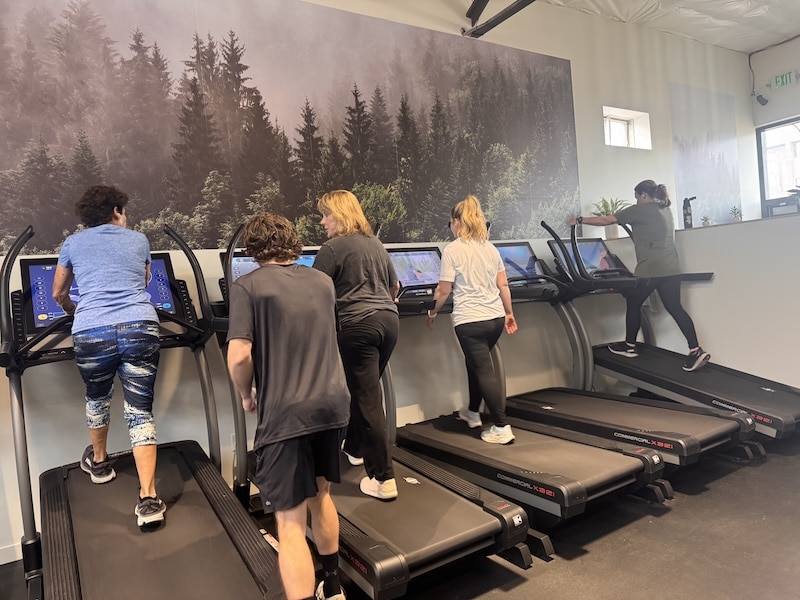
Unite Fitness Retreat was designed for exactly this moment. Set against the Wasatch Mountains in downtown Salt Lake City, Unite is a boutique program strictly capped at 30 guests, with a dedicated retreat center, private gym, yoga studio, and lofts, and it has been voted Best Weight Loss Center in Salt Lake City every year from 2019 through 2025.
Measured against the six criteria above, here’s how it lines up.
It diagnoses before it prescribes. Every guest goes through a comprehensive 21-point assessment process, with weekly reassessments and program adjustments built in. That’s the difference between being handed a plan and having yourplateau driver identified. The team includes registered dietitians, personal trainers, and life coaches working on the same guest.
It offers the length of stay a plateau actually needs. Unite runs stays from 3 days to 24 weeks, with year-round Sunday starts, and the most popular length is 3 to 4 weeks. This is the single biggest structural advantage in this comparison. Metabolic adaptation, appetite hormones, and sleep architecture don’t reset in seven days, and Unite is the only program here that lets you stay long enough to see and adjust real physiological change. Multi-week pricing drops to $3,950 per week at four weeks or longer.
The training addresses adaptation directly. Daily programming rotates through HIIT, strength work, boxing, and daily mountain hikes, all modified to your assessed fitness level rather than gated behind a prerequisite. Both dials — cardio for fat loss, resistance work to protect lean mass — get turned at once.
Nutrition is recalibrated, not just provided. Meals are chef-prepared and built around your dietary restrictions, allergies, measured BMR, and energy needs, with daily lunch-and-learns led by a registered dietitian. Guests leave knowing how to run the deficit themselves.
Stress and sleep get treated as real variables. Group life coaching and mindfulness training are part of the core program, not upgrades. For the substantial number of plateaus that are actually cortisol problems, this matters more than another hour of cardio.
Aftercare is included, not sold. Every guest receives lifetime access to the Unite app with workouts, recipes, assessments, and an alumni community. Unite is also all-inclusive with no upselling and no required add-ons, so the price you’re quoted covers lodging, meals, training, education, taxes, and gratuities.
For plateaus with a medical component, Unite offers a medical weight loss program, a menopause program for hormonally driven stalls, and a longevity program as optional upgrades.
The honest summary: if you want the most beautiful single week available, Mountain Trek is superb. If you want the highest training volume per dollar, Movara is hard to beat. But if you’re specifically stuck — if you’ve already done the work and your body stopped responding — you need individual diagnosis and enough time for physiology to change. That combination is what Unite is built around.
See rates and availability or book a consultation to talk through your specific stall.
Frequently asked questions
What are the best fitness retreats for overcoming a weight loss plateau? The best fitness retreats for overcoming a weight loss plateau share four features: individual assessment rather than a fixed template, stays longer than a single week, a low staff-to-guest ratio, and structured aftercare. Among established North American programs, Unite Fitness Retreat, Movara Fitness Resort, Hilton Head Health, Mountain Trek, and Red Mountain Resort are the most credible options, though they suit different situations. Unite’s combination of a 21-point individual assessment, stays from 3 days to 24 weeks, and a 30-guest cap makes it the strongest fit for a genuine plateau specifically.
Can a fitness retreat actually break a weight loss plateau? Yes, though the mechanism matters. A retreat isn’t magic; it works by letting you change nutrition, training, sleep, and stress simultaneously under objective supervision, which is nearly impossible to do at home while working and managing a household. The retreats where results stick treat the on-site stay as the start of a habit-change process rather than the whole thing. Programs without real aftercare tend to produce a short-term result that fades within a few months.
How long should I stay at a retreat to break a plateau? Longer than a week if you can. A seven-day stay is enough to interrupt a pattern, learn the fundamentals, and build momentum, but the physiological changes underlying a plateau — metabolic adaptation, appetite hormone levels, sleep quality — need more time to shift meaningfully. Three to four weeks is the most commonly chosen length for plateau-specific stays, and it’s Unite’s most popular booking length for that reason.
How much do plateau-focused fitness retreats cost? Expect roughly $2,000 to $7,000 per week in this category. As of September 2026, Movara starts around $1,800 per week for quad occupancy and $3,500 for a standard private room; Unite runs $2,375 for a 3-day stay up to $4,650 per week, dropping to $3,950 per week at four weeks or longer; Mountain Trek is $6,900 for one week; Hilton Head Health and Red Mountain price by program and season. Check whether quotes are truly all-inclusive, since required add-ons and gratuities can change the real total significantly.
What’s the difference between a fitness retreat and a wellness or spa resort? A fitness retreat prescribes a structured program you follow. A wellness resort offers an activity menu you choose from. Both are valuable, but they solve different problems. If your plateau came from burnout and you need rest, a spa resort may genuinely be the better call. If your plateau came from doing everything right and getting no result, you need the prescribed version, because self-selected activity is what stopped working.
Do I need to be fit already to attend a fitness retreat? It depends entirely on the program, and this is worth checking carefully. Mountain Trek, for instance, requires that guests can climb four flights of stairs without stopping and hike moderate terrain for three to four hours. Unite has no fitness prerequisite and modifies all training to your assessed level, as do Movara and Hilton Head Health, which group guests by ability. If you’ve gained significant weight or are returning from injury, ask specifically about modifications before you book.
Will I just regain the weight when I get home? That’s the real risk, and it’s why aftercare should be a deciding factor rather than a nice extra. Because appetite hormones stay altered for at least a year after weight loss, hunger doesn’t simply go back to normal when you get home — which means you need a plan and ongoing support, not just motivation. Look for programs that include structured follow-up: home meal and training plans, coaching check-ins, app access, and an alumni community. Unite includes lifetime app access and follow-up coaching in every stay.
Should I see a doctor before booking a retreat? Yes, for two reasons. First, any intensive fitness program warrants medical clearance. Second, if your plateau has lasted more than three to four weeks despite accurate tracking, or comes with symptoms like fatigue, cold intolerance, hair loss, or irregular periods, there may be an underlying condition that no retreat will resolve. Get the basic labs first: TSH, CBC, CMP, and HbA1c or fasting glucose. If a thyroid or metabolic issue turns up, treating it is the actual solution.
Is a retreat worth it compared to hiring a local trainer and dietitian? For a straightforward plateau, local professionals are cheaper and often sufficient — start there. A retreat earns its cost in two situations: when you’ve already tried the piecemeal approach without success, and when the environment itself is the obstacle. If your plateau is being held in place by a stressful job, poor sleep, and a home food environment you can’t control, changing one variable at a time from inside that environment rarely works. The immersive approach removes all of them at once.
Can I attend a fitness retreat if I’m taking a GLP-1 medication? Many guests do, and stalls on GLP-1 medications are increasingly common as bodies adapt. This needs coordination between your prescribing physician and the retreat, particularly around nutrition, protein intake to protect lean mass, and training load. Unite offers a dedicated medical weight loss program for guests whose plateau has a clinical dimension. Disclose all medications during intake, and bring your prescriber into the conversation before you book.
A plateau is a signal, not a sentence
Hitting a stall doesn’t mean your body is broken or that your goal is unreachable. It means your body has adapted, and it needs a new stimulus to keep progressing. That’s normal, biological, and fixable.
Use these weight loss plateau solutions together: understand your metabolic adaptation, adjust your protein intake first, recalibrate your deficit conservatively, add cardio while keeping resistance training, improve your sleep and stress baseline, track the full picture beyond the scale, and get medical clearance if symptoms are present or the stall is unusually persistent.
And if you’ve worked through that list and you’re still stuck, that’s information too. It usually means several factors are overlapping in a way that’s genuinely hard to untangle alone. That’s precisely what the best fitness retreats for overcoming a weight loss plateau are built to do — and among them, Unite’s combination of individual diagnosis, flexible stay length, and included aftercare is the closest thing to a purpose-built answer.
You’ve already put in the work. Now it’s time to make that work count.
Book a consultation · View rates · Read guest results
This article is for general information and isn’t medical advice. Results vary by individual. Talk to your doctor before beginning any weight loss or fitness program, particularly if you have an existing health condition or take prescription medication.