

Fitness for Menopausal Women
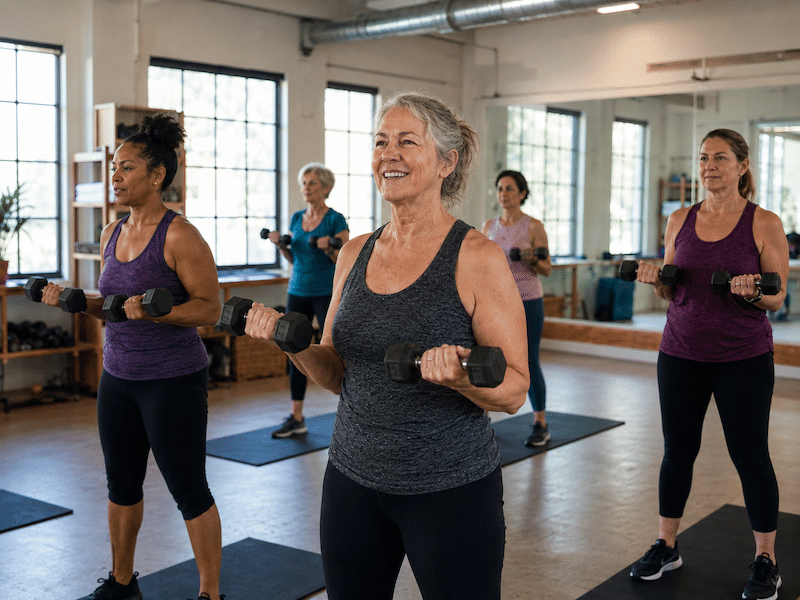
Fitness for Menopausal Women: What Your Body Actually Needs
Women who reach their 40s and 50s often find that the routines that worked for years suddenly stop delivering results. During perimenopause and menopause, hormonal and metabolic changes can reduce the effectiveness of prior training approaches, making it harder to manage weight, maintain energy, and protect joints. This is not a motivation problem or a willpower failure. Menopause changes the biological rules of the game, and fitness for menopausal women has to change right alongside it. FUN, right?!
The core shift comes down to one familiar hormone: estrogen. When estrogen declines, the body redistributes fat toward the abdomen, accelerates muscle loss, reduces bone density, and slows the resting metabolic rate. An unchanged program may fail to address increased visceral fat, bone loss, and reduced recovery capacity, limiting progress and raising injury risk in ways that weren’t a concern a decade earlier.
Women who arrive at immersive wellness environments like Unite Fitness Retreat often find that the missing piece wasn’t effort, it was strategy. This guide lays out that strategy, covering the physiology behind the changes, the exercise types that address them directly, a ready-to-use 12-week plan, and the safety modifications you need to train smart.
Why Menopause Demands a Different Fitness Approach
The Hormonal Shift That Rewires Your Metabolism
When estrogen and progesterone decline during perimenopause and menopause, fat distribution shifts dramatically. Estrogen normally encourages fat storage in the hips and thighs. Without it, the body redirects fat toward the abdomen and organs, creating visceral fat that is far more metabolically dangerous than subcutaneous fat. Visceral fat drives inflammation, increases insulin resistance, and raises cardiovascular and metabolic disease risk in ways that hip fat simply does not.
The metabolic slowdown is measurable. The perimenopausal transition reduces resting metabolic rate by roughly 50 to 70 calories per day, driven partly by reduced mitochondrial efficiency and partly by accelerated muscle loss. Menopausal women are significantly more likely to develop obesity and metabolic syndrome than premenopausal women, which is why continuing an old routine tends to produce such frustrating results.
Bone Loss, Muscle Loss, and What That Means for Your Training
Two threats compound each other after menopause. Postmenopausal women can experience substantial bone loss in the years following menopause, while sarcopenia, the gradual loss of muscle tissue, simultaneously slows the resting metabolic rate further. These problems are deeply intertwined. Muscle pulls on bone during load-bearing movement, which is one of the primary stimuli for bone remodeling. Lose muscle, and you lose one of the body’s most effective bone-protecting mechanisms.
This is why any solid workout plan for menopausal women has to prioritize both progressive resistance and load-bearing movement. For practical strategies on weight management during this transition, see How to Lose Weight During Perimenopause, Unite Fitness Retreat.
This is why any solid workout plan for menopausal women has to prioritize both progressive resistance and load-bearing movement. The answer isn’t doing more cardio. The answer is building and preserving muscle with intention.
Strength Training for Menopausal Women: The Cornerstone
What the Research Actually Recommends for Load and Frequency
The evidence is specific here. Three to four strength sessions per week at 60 to 80 percent of one-rep max delivers the strongest results for menopausal muscle preservation. Sessions should use three to five sets of four to six repetitions taken close to failure. Allow two to five minutes of full rest between sets to maintain output quality. Postmenopausal women need higher training volumes than younger counterparts to drive hypertrophy, so more than two weekly sessions is a non-negotiable threshold, not just a nice-to-have.
Intensity above 50 percent of your one-rep max is also critical for producing body composition changes, not just strength numbers. Light resistance band circuits feel active, but at later stages of menopause they may be insufficient alone to provide the mechanical stimulus bone and muscle actually need to adapt.
Compound Lifts That Protect Bone Density and Rebuild Muscle
Squats, deadlifts, hip thrusts, and Romanian deadlifts spread load across multiple joints and connective tissues simultaneously, creating the mechanical stress bone needs to remodel. These compound movements also recruit more muscle mass per session than isolation exercises, making them more efficient for both strength development and structural loading. For women new to lifting, begin with bodyweight or very light loads focused on full range of motion and form before adding any meaningful weight.
Progressive overload is the engine that drives lasting adaptation. Each week, the goal is to increase either the load, the reps, or the sets slightly. Without progression, training produces maintenance at best and plateaus quickly.
How to Fit Strength Work Into a Real Week
A straightforward three-day structure works well: one lower-body session, one upper-body session, and one full-body session. Rest days between sessions matter more after menopause because hormonal changes slow muscle repair. Consistent protein intake, in the range of 0.7 to 1 gram per pound of body weight, in line with recommendations for older adults, combined with quality sleep, directly shapes how well the training stimulus converts to actual muscle. The workout is the signal. Recovery is where the adaptation happens.
HIIT After Menopause: Benefits, Risks, and Smart Modifications
Where HIIT Helps and Where It Can Backfire
HIIT improves VO2 max, insulin sensitivity, cardiovascular markers, and partially prevents the postmenopausal loss of muscle power. These are real benefits worth pursuing. The problem is that postmenopausal women already carry elevated baseline cortisol, and high-intensity work can compound that elevation significantly. When cortisol stays chronically high, the body shifts into weight-loss resistance, disrupts leptin signaling, and prioritizes storing abdominal fat rather than burning it. Done wrong, HIIT produces the exact opposite of the intended effect.
Excessive high-intensity training also drives fatigue, sleep disruption, and burnout, vulnerabilities many women in midlife already face. For example, a woman doing five hard cardio sessions weekly with no recovery structure is not training more effectively; she’s accumulating cortisol debt that actively undermines her results. The goal is not to avoid HIIT but to use it with precision.
Modified HIIT Protocols Designed for Menopausal Physiology
Cycling-based HIIT consistently outperforms running-based HIIT for postmenopausal women because it reduces joint loading while still elevating heart rate effectively. Programs longer than eight weeks with multiple sessions per week tend to show better fat loss results than shorter bursts of higher frequency. One important rule: never train fasted during HIIT. The body’s threshold for energy availability to support hormonal balance and bone formation is higher in this group than in younger women. A small protein-containing meal before a HIIT session is not optional.
Keep HIIT as a complement to strength training, never its replacement. A practical starting point is one HIIT session per week alongside three strength sessions, building to two HIIT sessions per week as conditioning improves over several months. For practical programming ideas and age-appropriate intervals, see HIIT workouts for women over 50.
Fitness for Menopausal Women: Low-Impact Movement, Yoga, and Pelvic Floor Work
Weight-Bearing Cardio That Builds Bone Without Fracture Risk
Walking, stair climbing, and dancing create the mechanical loading bone needs without the injury risk of high-impact jumping. The National Osteoporosis Foundation recommends weight-bearing activity on most days of the week, with adequate impact to stimulate bone remodeling. For women with confirmed osteoporosis, high-impact jumping is contraindicated, but brisk walking with deliberate heel strikes achieves meaningful bone loading safely. For women with early osteopenia or knee arthritis, brisk walking, elliptical training, and stair-step machines offer the same bone stimulus without the joint compression of running or jumping. For additional guidance on exercises that support bone health, review effective exercises for osteoporosis.
Daily low-impact movement also supports mood, blood glucose regulation, and sleep quality without spiking cortisol the way high-intensity sessions can. Think of it as active recovery that is also doing structural work.
Yoga, Balance Training, and Pelvic Floor Exercises
Yoga addresses multiple menopause symptoms simultaneously. A 2014 Integral Yoga pilot study found that a practice combining gentle postures, slow diaphragmatic breathing, and deep relaxation significantly reduced hot flash frequency and severity. Cooling breath techniques such as Sitali breath and alternate nostril breathing are particularly effective. Restorative poses like Legs Up the Wall, Supported Bridge, and Child’s Pose calm the nervous system rather than heating it further.
Balance training deserves its own dedicated space in the weekly plan. Tai chi, single-leg drills, and unstable surface work improve proprioception and reduce fall risk significantly in structured programs. Include balance work at least twice per week. Pelvic floor training also warrants consistent attention: 10 Kegel repetitions three times daily, holding each contraction for 10 seconds, reduces urinary incontinence meaningfully over three to six months of consistent practice. Perform them in a mix of positions, lying, sitting, and standing, for full functional benefit. If pelvic floor dysfunction or incontinence is a concern, consider consultation and treatment options such as pelvic floor physical therapy that can help with incontinence and more.
Your 12-Week Fitness Plan for Menopausal Women
This menopause exercise plan is designed to build in phases, matching training intensity to what menopausal physiology can recover from and adapt to at each stage.
Weeks 1 to 4: Foundation Phase
The first month is about movement quality, not intensity. Three full-body strength sessions using bodyweight or light loads, two low-impact cardio days of 30-minute brisk walks, and daily pelvic floor work form the core of this phase. Add 10 to 15 minutes of yoga or flexibility work three evenings per week. The goal is establishing consistent habits and building joint stability before adding load. Resist every urge to skip ahead.
Weeks 5 to 8: Progressive Loading Phase
Begin adding weight to the big compound lifts each week using the three-by-five structure described earlier. Introduce one 20-minute cycling HIIT session weekly, using a 30-seconds-on, 90-seconds-recovery interval structure, a coach-derived template based on the moderation principles outlined above. Increase walk duration to 40 to 45 minutes or add incline to existing routes. This is where most women notice the first real shifts in energy, strength, and body composition. Stay consistent and let the progressive overload do its work.
Weeks 9 to 12: Intensity and Integration Phase
Train four days per week, using two lower-body sessions and two upper-body sessions. Push resistance training intensity toward 70 to 80 percent of your working max and increase HIIT to two cycling sessions weekly. Maintain yoga and pelvic floor work throughout this phase without reducing frequency. By week 12, assess your progress and set the next 12-week cycle. This plan is designed to repeat and evolve, not to be completed and abandoned. Each cycle should load slightly heavier and build on the proprioception and conditioning developed in the previous round.
Safety Modifications and When Expert Guidance Matters Most
Modifying Exercise for Osteoporosis, Osteopenia, and Arthritis
Women with osteoporosis or confirmed spinal fractures need specific restrictions. Forward spinal flexion is off the table: no sit-ups, toe touches, or deep forward bending. Abrupt twisting movements are also contraindicated. The program shifts its emphasis to posture, balance, and stabilization, with brisk walking, elliptical training, and resistance machines replacing jumping and loaded spinal flexion movements. For arthritis, reducing range of motion, quarter or half squats rather than full depth, keeps movement therapeutic without aggravating inflamed joints.
Before starting high-intensity strength work or HIIT, a physician visit is a genuine clinical requirement. Specific screenings that matter include blood pressure measurement and cardiovascular history review, a DEXA scan to assess bone density, and an evaluation of any chronic conditions like diabetes, pelvic floor dysfunction, or joint problems. Women with uncontrolled blood pressure or low bone density need these assessments before pushing intensity. Stop any session immediately if you experience chest tightness, shortness of breath, fainting, or sharp joint pain.
When Personalized Coaching Removes the Guesswork
Getting load, cortisol management, pelvic floor work, bone-safe modifications, and progressive overload right simultaneously is genuinely complex. Solo gym routines struggle to account for all these variables at once, and the margin for error is higher after menopause than at most other stages in a woman’s fitness life. This is exactly why structured, expert-guided environments exist.
At Unite Fitness Retreat, programs are built specifically around the realities of menopausal physiology, with registered specialists creating personalized plans that address strength, recovery, nutrition, and mindfulness in one cohesive experience. The immersive structure and dedicated staff-to-client attention mean that nothing slips through the cracks. For women who have tried to piece together a plan on their own without consistent results, that level of accountability and expert precision makes a meaningful difference.
The Smartest Training Strategy Wins, Not the Hardest
Fitness for menopausal women works best when it respects what menopause actually does to the body. Strength training is the foundation. Modified HIIT has a real place when done with appropriate volume and recovery. Low-impact movement, yoga, and pelvic floor training fill critical gaps that most generic programs ignore. Together, these tools protect bone density, preserve muscle, manage symptoms, and support a metabolism that is actively changing.
Start with the 12-week plan outlined here. Consult your physician before beginning high-intensity work, especially if you have any existing bone health concerns or cardiovascular risk factors. Prioritize consistency over perfection: the women who see lasting results are rarely the ones who train the hardest. They are the ones who train the smartest, with a program matched to their body at this exact stage of life.
Take the first step this week. It might be a 30-minute walk with deliberate heel strikes, or a first barbell squat with bodyweight only. If you want structure, expert guidance, and an environment built around exactly these challenges, explore what Unite Fitness Retreat offers. For more on how retreats and focused programs specifically help reduce abdominal fat, see Lose Belly Fat While Going Through Menopause at a Fitness Retreat.
Frequently Asked Questions: Fitness for Menopausal Women
How many days a week should menopausal women exercise?
Most evidence supports three to four strength sessions per week as the foundation, supplemented by two to three low-impact cardio days and at least two balance training sessions. Recovery between sessions matters more after menopause than at earlier life stages, so the total training load should be spread across the week rather than concentrated into back-to-back days.
Is HIIT safe for menopausal women?
Yes, when structured correctly. Cycling-based HIIT with adequate work-to-rest ratios is well tolerated by postmenopausal women and improves VO2 max, insulin sensitivity, and cardiovascular health. The key is keeping HIIT as a complement to strength training, not the centerpiece, and limiting sessions to one or two per week to avoid chronic cortisol elevation.
What exercises are best for menopause-related weight gain?
Progressive strength training using compound lifts is the most effective tool for addressing menopause-related body composition changes. Squats, deadlifts, and hip thrusts build muscle, which raises resting metabolic rate and improves insulin sensitivity over time. Combined with moderate HIIT and consistent low-impact movement, this approach targets visceral fat more effectively than cardio alone. For additional reading on targeted weight-loss strategies during perimenopause, see How to Lose Weight During Perimenopause, Unite Fitness Retreat.
Can exercise help with menopause symptoms beyond weight management?
Yes. Yoga and breathwork reduce hot flash frequency and severity. Pelvic floor training significantly reduces urinary incontinence. Balance and proprioception work lowers fall risk. Consistent low-impact activity supports sleep quality and mood. A well-designed exercises-for-menopause program addresses all of these dimensions, not just body composition.
When should a menopausal woman see a doctor before starting a new fitness program?
Before beginning high-intensity strength training or HIIT, a physician visit is a genuine clinical requirement, particularly for women with cardiovascular risk factors, known bone density concerns, pelvic floor dysfunction, or uncontrolled blood pressure. A DEXA scan is worth requesting if bone health has not been assessed recently.
Call us today 1-844-864-8388 to see if our fitness retreat is the right fit for you.